
Types of Coffee Drinks Explained: Espresso, Milk, Iced and World Coffee Drinks
This post has affiliate links. If you buy through them, I may earn a small commission at no extra cost to you. As an Amazon Associate I earn from qualifying purchases. How I pick products
On this page
There are 2 bases for every coffee drink, espresso and brewed coffee, and 5 main families built on them: black espresso drinks, milk drinks, iced drinks, sweet drinks and world coffees. A latte, cappuccino and flat white are all espresso plus steamed milk; what changes is how much milk and how much foam.
This guide explains each type, with a ratio chart for the milk drinks, the caffeine in a shot versus a cup, and a simple way to choose 6 drinks for a home coffee bar menu. The cups and gear I mention are research-based picks from Amazon listings checked on October 25, 2026, not things I’ve tested.
What are the main types of coffee drinks?
The main types of coffee drinks are espresso drinks (espresso, americano, latte, cappuccino) and brewed coffee drinks (drip, French press, cold brew), grouped into 5 families. Wikipedia’s list of coffee drinks makes the same split: pressurized espresso on one side, slow-brewed coffee on the other.
The 5 families on this page:
- Black espresso drinks: espresso, doppio, ristretto, lungo, americano.
- Espresso with milk: latte, cappuccino, flat white, cortado, macchiato, mocha.
- Cold and iced drinks: iced latte, shaken espresso, cold brew, freddo espresso.
- Sweet and flavored drinks: mocha, flavored lattes, affogato, dalgona.
- World coffee drinks: Cuban, Turkish, Vietnamese, Spanish and Mexican coffees.
What is the difference between espresso and regular coffee?
Espresso is coffee brewed fast under pressure, with hot water at about 86 to 95 °C (187 to 203 °F) forced through fine, packed grounds, while regular coffee drips or steeps slowly through a coarser grind. Espresso comes out thick and concentrated in a 1 oz (30 ml) shot.
A shot is topped with a layer of tan crema. An americano is espresso diluted with hot water, so it tastes closer to drip coffee but keeps the espresso flavor.
Mayo Clinic’s caffeine chart lists 63 mg in a 1 oz espresso and 96 mg in an 8 oz cup of brewed coffee. Per ounce, espresso is far stronger; per drink, a mug of drip usually has more.

Black espresso drinks and espresso shots
There are 7 black espresso drinks, and they differ only in shot length, added water or added brewed coffee. None of them contain milk. A ristretto is the most concentrated and an americano the most diluted, with 5 to 14 oz of hot water.
- Espresso: a single 1 oz shot, served in a demitasse.
- Doppio: a double shot served in a demitasse, per Wikipedia.
- Ristretto: a shorter shot pulled with about half the water, so it tastes sweeter and denser.
- Lungo: a longer shot where all the extra water runs through the coffee.
- Americano: 1 or 2 shots plus 5 to 14 oz (150 to 400 ml) hot water.
- Long black: hot water first, then the shots on top, which keeps the crema.
- Red eye: brewed coffee with 1 shot added; a black eye takes 2.
Espresso and cortado cups
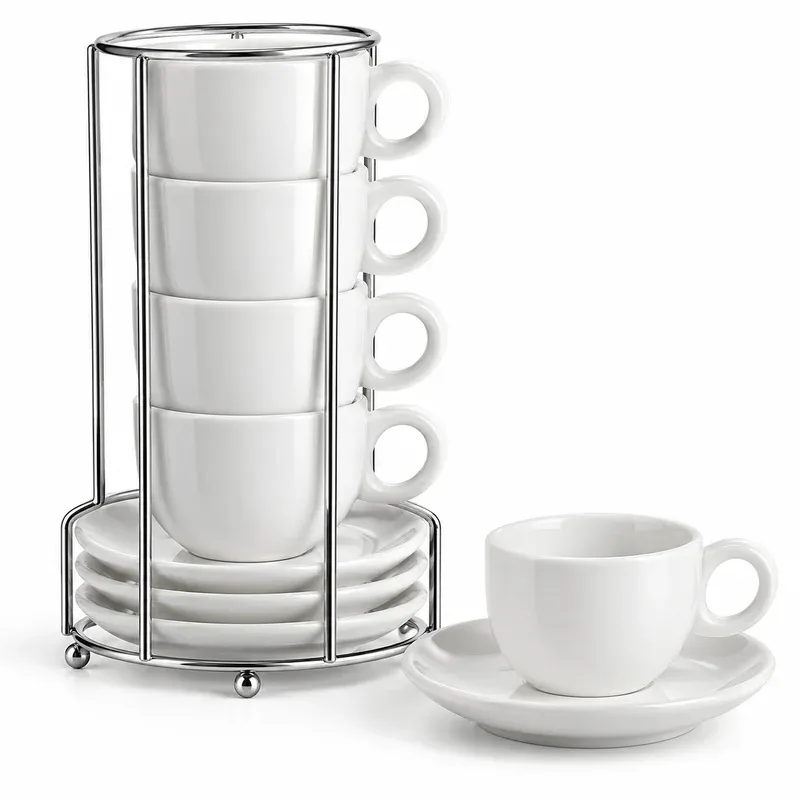
Sweese 4 oz Stackable Espresso Cups with Saucers and Stand, Set of 4
- Best for
- Espresso and Nespresso drinkers
- Why it's here
- Four 4-ounce porcelain espresso cups with saucers that stack on a small metal stand. The stand takes up about the footprint of one saucer on the coffee bar.
- Watch out
- 4 oz is right for a double shot or a cortado, too small for a latte.
- Price
- $ · Save
What we like
- Pro: Stacks to save counter space
- Pro: Microwave and dishwasher safe, per the listing
- Pro: Plain white matches any coffee bar
Keep in mind
- Con: Too small for milk drinks
- Con: Stand adds one more thing to dust
Affiliate link · Price may change
Espresso drinks with milk: latte, cappuccino, flat white and more
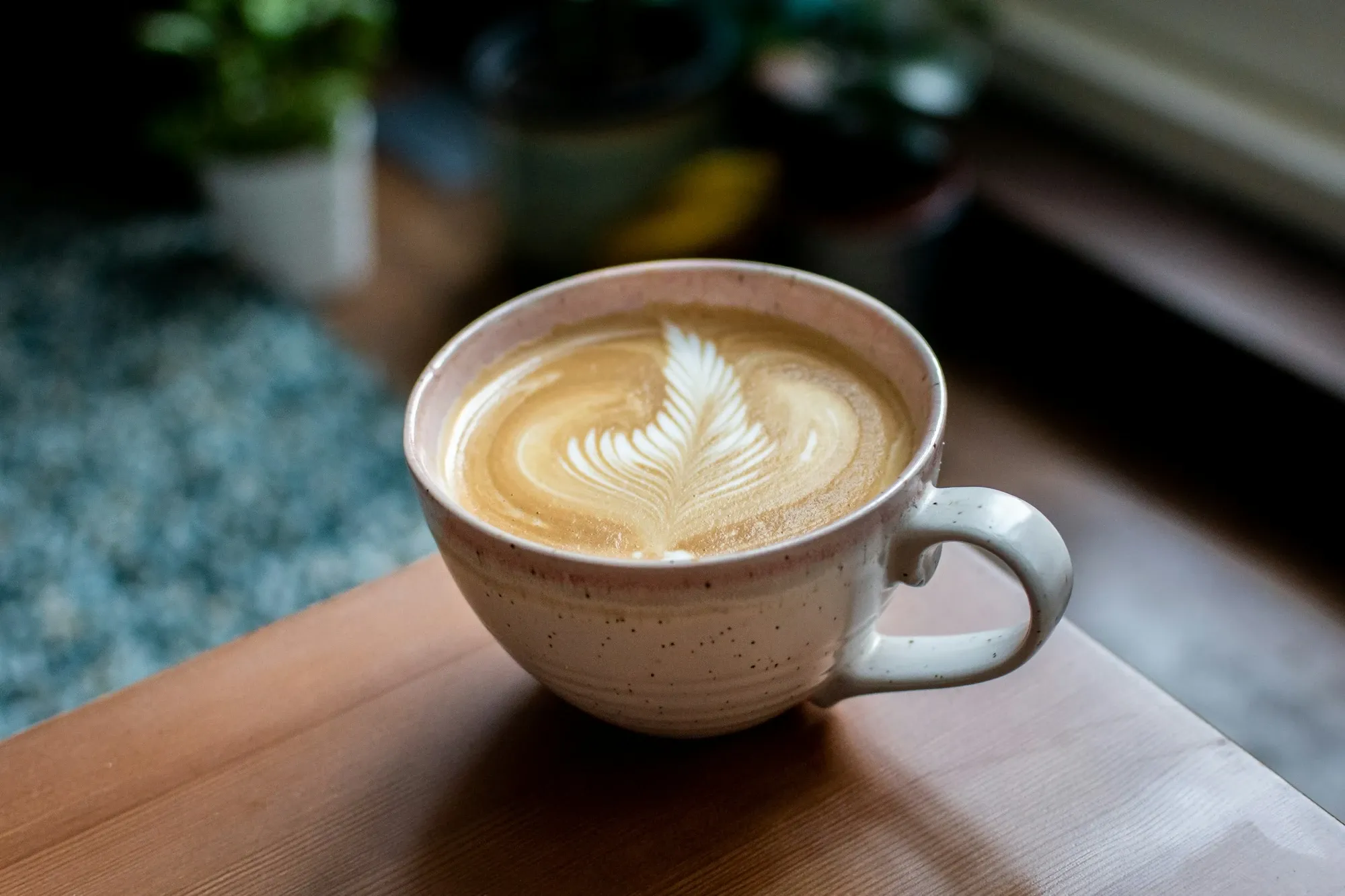
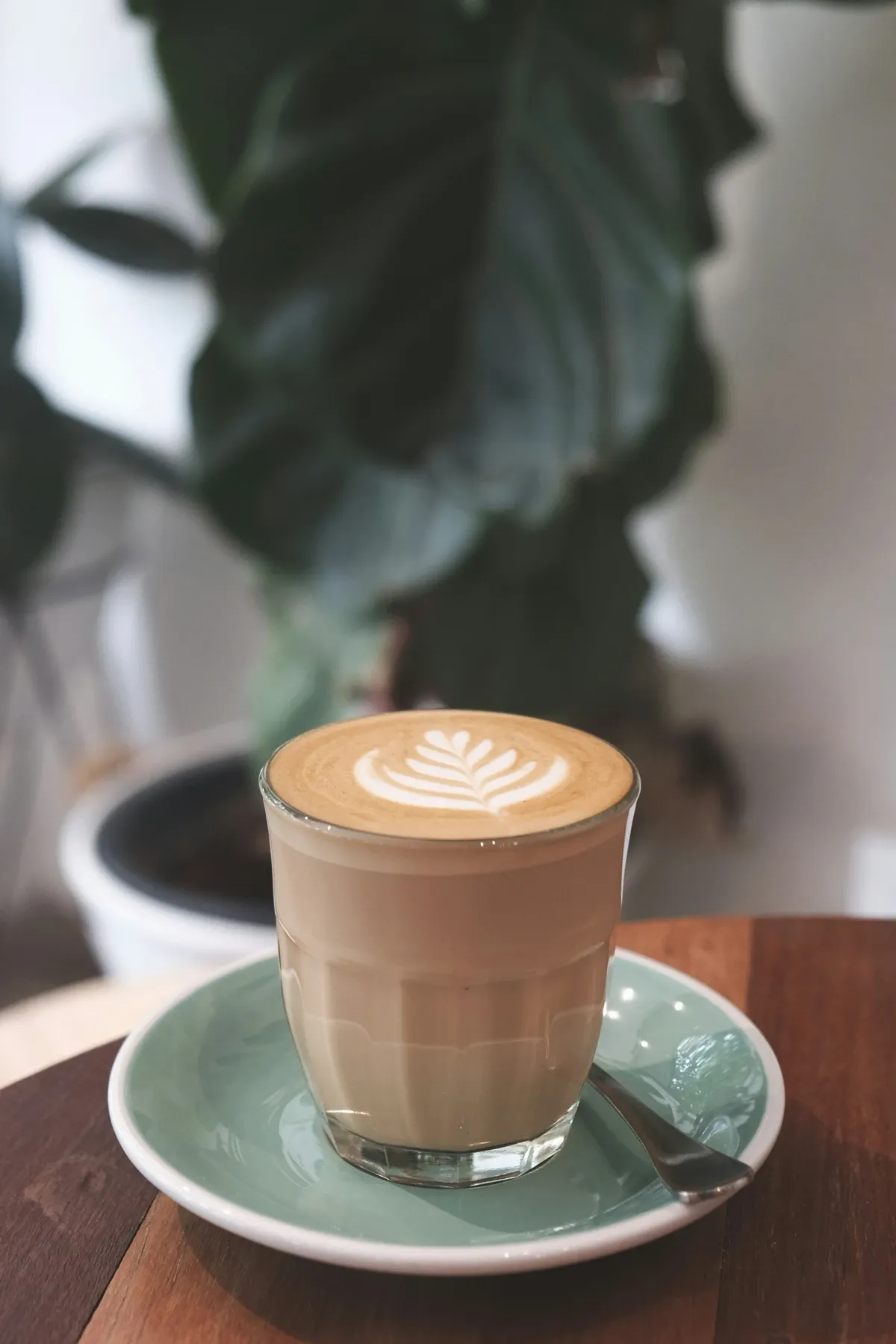
Espresso drinks with milk differ by the ratio of espresso to steamed milk and the depth of foam: a cappuccino is equal thirds, a latte is about one third espresso, and a cortado is half and half with no foam. Nescafé and Today describe these builds the same way.
The chart below compares the 6 milk drinks from strongest to mildest.
| Drink | Espresso | Milk | Foam | Taste |
|---|---|---|---|---|
| Macchiato | 1 shot | A spoonful | Small dollop | Strongest |
| Cortado | 1 part | 1 part steamed | None | Strong, smooth |
| Flat white | Double shot | Microfoamed, less than a latte | Thin, velvety | Coffee-forward |
| Cappuccino | 1/3 | 1/3 steamed | 1/3 foam | Balanced, airy |
| Latte | About 1/3 | About 2/3 steamed | Thin layer | Mild, milky |
| Mocha | About 1/3 | About 2/3 steamed + chocolate | Often whipped cream | Sweet |
A flat white is the one people mix up most. Wikipedia describes it as smaller than a latte with less, more velvety microfoam, so the espresso leads. A Gibraltar is a cortado served in a small Gibraltar glass.
Three comparisons come up most often:
- Latte vs cappuccino: both use the same shot, but a cappuccino splits the milk into equal parts steamed milk and foam, so it tastes stronger and lighter. A latte is mostly steamed milk with a thin foam layer.
- Flat white vs latte: a flat white uses a double shot and less milk, with velvety microfoam instead of a foam cap.
- Cortado vs macchiato: a cortado cuts the shot with an equal amount of steamed milk; a macchiato only marks it with a spoonful of foam.
For steaming milk
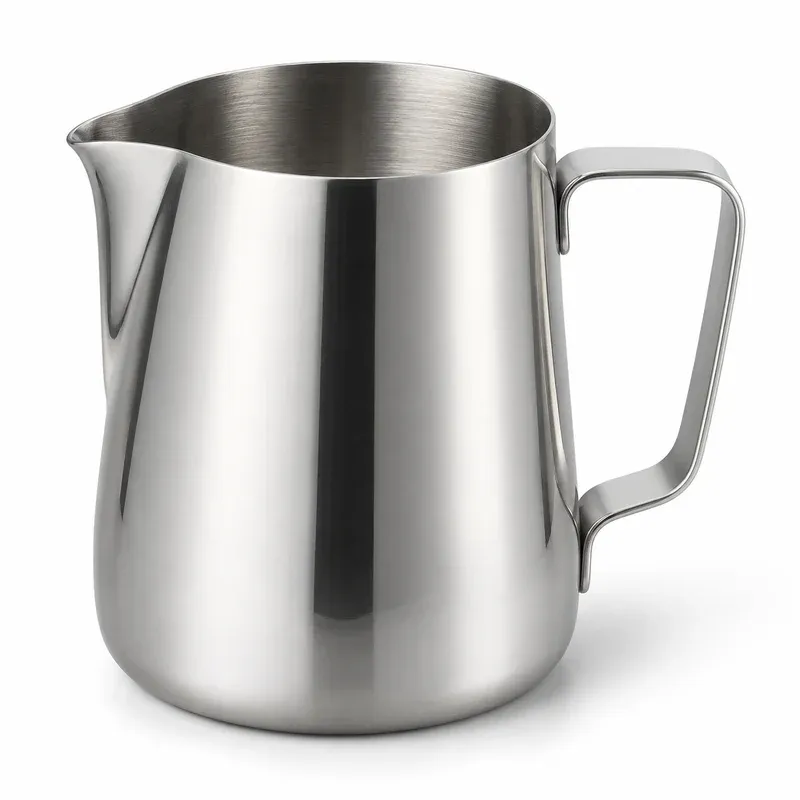
De'Longhi Stainless Steel Milk Frothing Jug, 12 oz (DLSC060)
- Best for
- Machines with a steam wand
- Why it's here
- 12 oz (350 ml) stainless pitcher with a pour spout for steaming milk on a wand, sized for one latte or two cappuccinos.
- Watch out
- Only needed with a steam wand. Pod and handheld-frother setups can skip it.
- Price
- $ · Save
What we like
- Pro: Right size for a single latte
- Pro: Pour spout for simple latte art
- Pro: Dishwasher safe
Keep in mind
- Con: No measuring lines
- Con: Handle gets warm
Affiliate link · Price may change
Cold and iced coffee drinks
Cold coffee drinks fall into 2 groups: hot coffee chilled over ice, and coffee brewed or mixed cold. Iced coffee, iced lattes and shaken espresso start hot; cold brew steeps in cold water for 12 to 24 hours and never touches heat. Greek frappé uses instant coffee.
- Iced coffee: hot brewed coffee poured over ice.
- Iced latte: espresso over ice with cold milk.
- Iced americano: espresso and cold water over ice.
- Shaken espresso: espresso shaken hard with ice and syrup until foamy, topped with milk.
- Cold brew: coarse coffee steeped in cold water for 12 to 24 hours, then strained.
- Freddo espresso: 2 shots mixed with sugar and ice into a foam, poured over ice, common in Greece.
- Greek frappé: instant coffee, sugar and water shaken into foam, with milk optional.
For iced and hot lattes
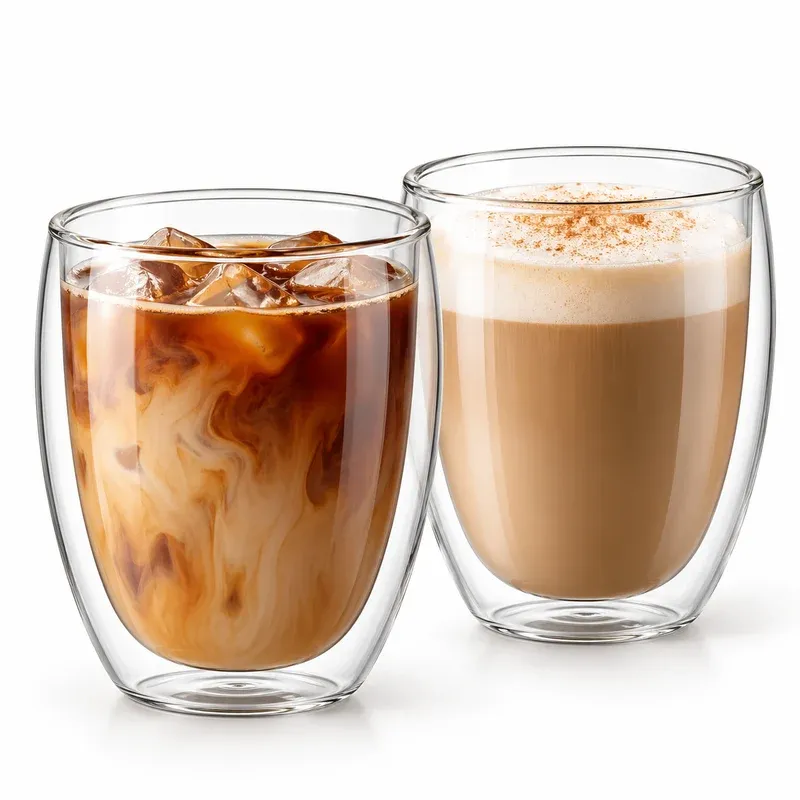
Bodum Pavina Double Wall Glasses, 15 oz, Set of 2
- Best for
- Iced lattes and pretty layered drinks
- Why it's here
- Double-wall borosilicate glasses make coffee look like it's floating. The outside stays cool to hold, and a pair suits a couple or a small coffee bar.
- Watch out
- No handle, and thin glass needs gentle washing.
- Price
- $$ · Mid
What we like
- Pro: Shows off latte layers
- Pro: Cool-touch outside
- Pro: Works hot or iced
Keep in mind
- Con: No handle
- Con: Fragile next to stoneware
Check Price on Amazon for Bodum Pavina Double Wall Glasses, 15 oz, Set of 2 (opens in a new tab)
Affiliate link · Price may change
Sweet and flavored coffee drinks
Sweet coffee drinks add one of 3 things to a base: syrup, chocolate or ice cream. A flavored latte is a regular latte with 1 to 3 pumps of syrup, a mocha adds chocolate, and an affogato is a shot poured over a scoop of vanilla ice cream or gelato.
Dalgona coffee belongs here too: instant coffee, sugar and hot water whipped into foam and spooned over milk. For the flavors themselves, my homemade coffee syrup guide has 6 recipes.
Coffee drinks around the world
Most coffee-drinking countries have one signature coffee drink, and 6 are easy to make at home: Italian caffè, Cuban cafecito, Turkish coffee, Vietnamese iced coffee, Spanish café bombón and American coffee milk. Each uses a strong base plus one local ingredient or method.
- Italy, caffè: a plain espresso, drunk standing at the bar.
- Cuba, cafecito: strong, sweet coffee; Wikipedia notes Cubans often mix the sugar in during brewing.
- Turkey, Turkish coffee: coffee ground to a fine powder, heated in water until it just boils, served with the grounds.
- Vietnam, cà phê sữa đá: strong drip coffee over sweetened condensed milk and ice.
- Spain, café bombón: espresso layered over sweetened condensed milk, popularized in Valencia.
- USA, coffee milk: coffee syrup stirred into cold milk, Rhode Island’s state drink since 1993.
For Cuban and Italian coffee
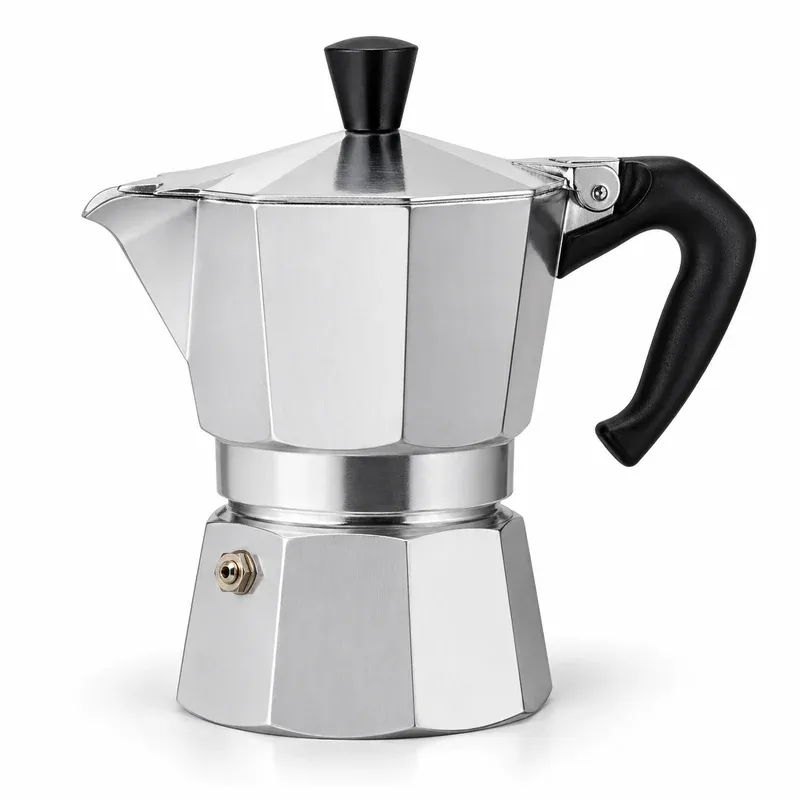
Bialetti Moka Express Stovetop Espresso Maker, 3 Cup
- Best for
- Espresso lovers without room or budget for a machine
- Why it's here
- The aluminum stovetop pot with the little man on the side. The 3-cup size makes about 3 small espresso-style servings for a latte or cortado at home.
- Watch out
- Aluminum Moka pots don't work on induction without an adapter. Check their stove.
- Price
- $$ · Mid
What we like
- Pro: Strong coffee for under $50
- Pro: No cord, no counter space when stored
- Pro: Lasts for years with a new gasket now and then
Keep in mind
- Con: Not induction-ready
- Con: Hand wash only
Check Price on Amazon for Bialetti Moka Express Stovetop Espresso Maker, 3 Cup (opens in a new tab)
Affiliate link · Price may change
What are the most popular coffee drinks?
The most popular coffee drinks are the cappuccino, the latte and the espresso shot, according to Nescafé’s coffee types guide. Add the americano, mocha, flat white, cold brew, iced latte, macchiato and cortado, and you have the 10 drinks on almost every US café menu.
Every one of those 10 is in my coffee recipes collection with home amounts, made with an espresso machine, a moka pot or instant coffee.
How do you build a coffee menu for a home coffee bar?
To build a home coffee bar menu, pick 6 drinks that cover 5 needs: one black, two milk, one iced, one sweet and one decaf or seasonal. Six drinks fit on a 5×7 sign and use only one base, one milk and 2 or 3 syrups.
- Black: americano or drip coffee.
- Milk: latte and cappuccino.
- Iced: iced latte or cold brew.
- Sweet: mocha or a vanilla latte.
- Seasonal or decaf: a monthly special.
Display it with a framed print or letter board; my coffee bar signs and coffee bar printables have ideas. If you’re choosing a machine for these drinks, see my best espresso machines for home, and for the rest of the setup, my coffee bar essentials list.
Frequently asked questions
Which coffee drink has the most caffeine?
Caffeine follows the number of shots or the amount of brewed coffee, not the milk. A red eye (8 oz brewed coffee plus a shot) has about 159 mg using Mayo Clinic's figures of 96 mg per 8 oz brewed and 63 mg per espresso shot, more than a single-shot latte.
What is a breve?
A breve is a latte made with steamed half-and-half instead of milk. It is richer and thicker than a regular latte and foams into a dense, creamy top. Order it as a breve latte or ask for any espresso drink made breve.
Is a macchiato stronger than a latte?
Yes, a traditional macchiato tastes stronger, because it is one espresso shot with only a spoonful of foamed milk, while a latte dilutes the same shot in about twice its volume of milk. The caffeine can be the same when both use one shot.
Free coffee bar essentials checklist
Every tool and supply on one printable page, tagged essential, upgrade or splurge, so you buy the right things first.