
Best Espresso Machines for Home: Picks by Budget, Size and Skill Level
This post has affiliate links. If you buy through them, I may earn a small commission at no extra cost to you. As an Amazon Associate I earn from qualifying purchases. How I pick products
On this page
The best espresso machine for most homes is the Breville Bambino Plus ($499.95 list at Breville). Breville rates its heater at 3 seconds, it textures milk without your help, and it’s under 8 inches wide, but you’ll need a grinder. If you want the grinder built in, pick the Breville Barista Express Impress ($799.95). On a tight budget, the De’Longhi Stilosa ($149.95) and the CASABREWS CM5418 ($118.99) are the starter machines most roundups agree on.
I picked 10 machines from about $120 to $2,200 and sorted them by budget. Every pick comes with what most reviews skip: the width, depth and height you need to plan for, the water tank, the portafilter size, the warm-up time and the cost once you add a grinder. That’s the part that decides whether a machine works on your coffee bar.
How I picked: this is a research-based guide, not a lab test. I started from the picks that Serious Eats, Wirecutter and Google’s own summaries agree on, then checked every spec against the maker’s product page or manual on October 24, 2026. I haven’t pulled shots on all 10 machines myself, so I don’t score taste. Prices are the maker’s or a named retailer’s list price on that date; Amazon prices aren’t shown.
The 10 best espresso machines at a glance
This table compares all 10 picks by size, water tank, portafilter and warm-up time. Sizes are the largest figure the maker or its retail listings publish for each side.
| Pick | Best for | Size (W × D × H) | Water tank | Portafilter | Warm-up | Where to buy |
|---|---|---|---|---|---|---|
| CASABREWS CM5418 Espresso Machine | Trying espresso for the least money | 5.5 × 12.3 × 12 in | 34 oz | 51 mm | About 1 min (CASABREWS) | Check Price for CASABREWS CM5418 Espresso Machine on Amazon (opens in a new tab) |
| De'Longhi Stilosa Manual Espresso Machine (EC260BK) | A first machine for milk drinks on a small budget | 8.1 × 13.5 × 11.2 in | 1 L (33.8 oz) | 51 mm | Not published | Check Price for De'Longhi Stilosa Manual Espresso Machine (EC260BK) on Amazon (opens in a new tab) |
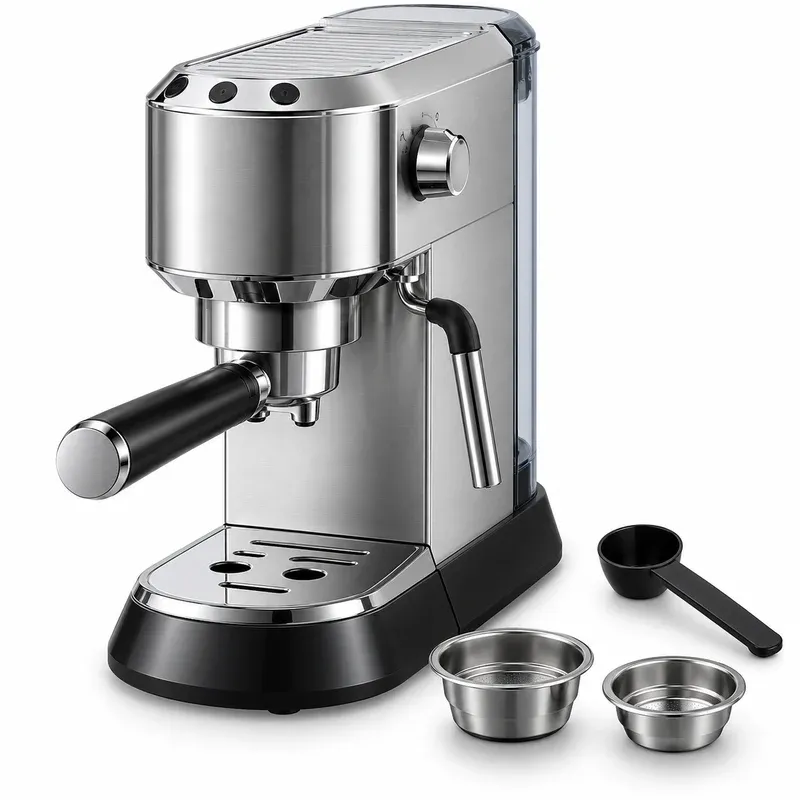
| De'Longhi Dedica Deluxe Espresso Machine (EC685M) | Narrow counters and shelf nooks | 5.9 × 13 × 12 in | 1.1 L (37 oz) | 51 mm | Not published (reviewers report about 40 s) | Check Price for De'Longhi Dedica Deluxe Espresso Machine (EC685M) on Amazon (opens in a new tab) |
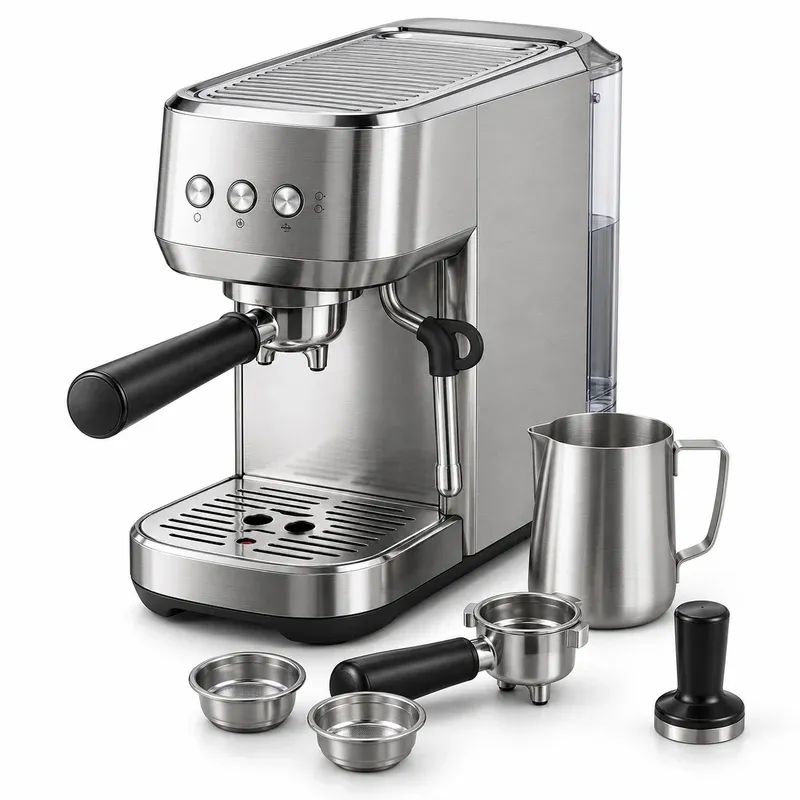
| Breville Bambino Espresso Machine (BES450BSS) | Real espresso on a narrow counter for under $300 | 6.3 × 13.5 × 12 in (largest of Breville's figures) | 47 oz (1.4 L) | 54 mm | 3 s (Breville) | Check Price for Breville Bambino Espresso Machine (BES450BSS) on Amazon (opens in a new tab) |
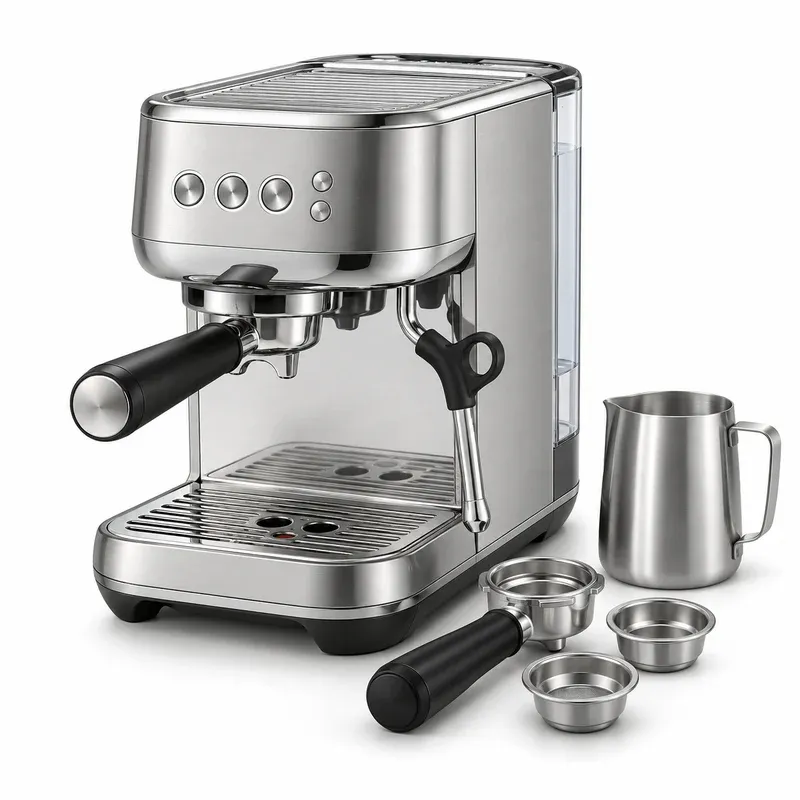
| Breville Bambino Plus Espresso Machine (BES500BSS) | Latte drinkers who want milk done for them | 7.7 × 14.3 × 12.2 in (largest of Breville's figures) | 64 oz (1.9 L) | 54 mm | 3 s (Breville) | Check Price for Breville Bambino Plus Espresso Machine (BES500BSS) on Amazon (opens in a new tab) |
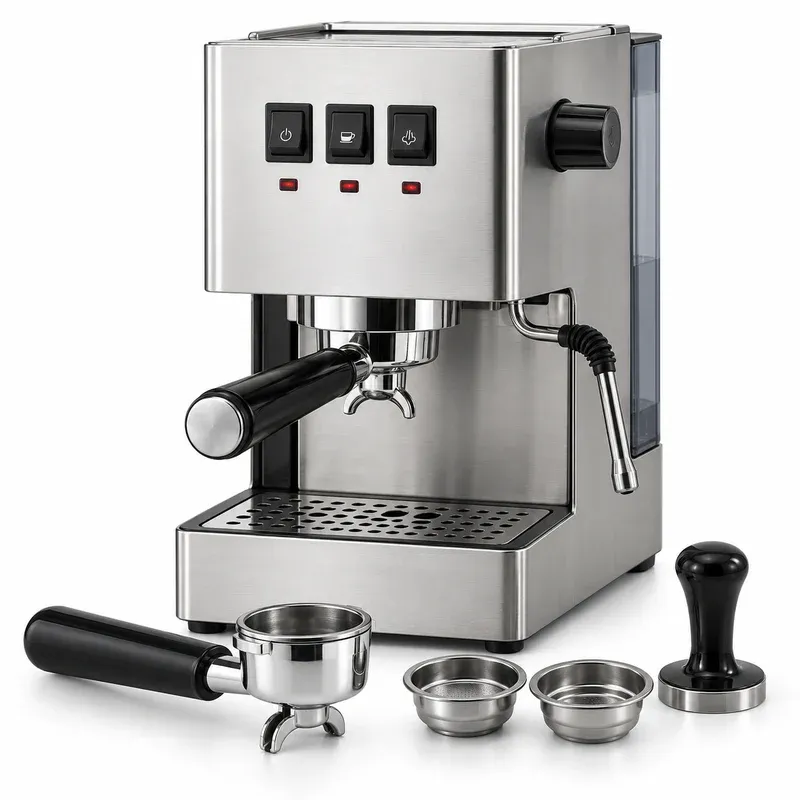
| Gaggia Classic E24 Espresso Machine (RI9380/46) | Hobbyists who want to learn manual espresso | 9.5 × 10.6 × 14.2 in (largest of Gaggia and listing figures) | 2.1 L (71 oz), front-removable | 58 mm | Under 10 min from cold (Gaggia) | Check Price for Gaggia Classic E24 Espresso Machine (RI9380/46) on Amazon (opens in a new tab) |
| Ninja Luxe Café Premier 3-in-1 Espresso Machine (ES601) | Households split between espresso and drip coffee | 13.6 × 13.2 × 14.6 in | 70 oz | Not published by Ninja | Not published | Check Price for Ninja Luxe Café Premier 3-in-1 Espresso Machine (ES601) on Amazon (opens in a new tab) |
| Breville Barista Express Espresso Machine (BES870XL) | One-box espresso with a grinder built in | 12.5 × 13.8 × 15.9 in | 67 oz (2 L) | 54 mm | Not published | Check Price for Breville Barista Express Espresso Machine (BES870XL) on Amazon (opens in a new tab) |
| Breville Barista Express Impress (BES876BSS) | Beginners who want help with dose and tamp | 13 × 15 × 16.6 in (largest of Breville's figures) | 67 oz (2 L) | 54 mm | Not published | Check Price for Breville Barista Express Impress (BES876BSS) on Amazon (opens in a new tab) |
| Rancilio Silvia Pro X Espresso Machine, Stainless Steel | Milk drinks back to back on prosumer-grade parts | 10 × 16.5 × 15.3 in (largest of Rancilio and listing figures) | 2 L (68 oz), removable | 58 mm | About 15 min (Amazon listing) | Check Price for Rancilio Silvia Pro X Espresso Machine, Stainless Steel on Amazon (opens in a new tab) |
Will it fit? Espresso machine sizes and cabinet clearance
An espresso machine fits your coffee bar when the top is at least 2 inches deeper than the machine and the space above it is at least 2 to 3 inches taller than the machine. Those 2 checks rule out more machines than price does.
Why I plan with the bigger number
Published sizes don’t always agree. Breville’s US product pages print sizes under a “W × D × H” label, but the numbers are in a different order: the Barista Express is listed as 15.9 × 13.1 × 12.4 inches, and 15.9 inches is its height with the bean hopper, which its Amazon listing confirms (12.5 W × 13.8 D × 15.9 H). For the Bambino Plus, Breville’s US page, Breville’s Asia page and the Amazon listing give 3 different depths, from 12.5 to 14.3 inches. The 14.3-inch figure likely includes the portafilter handle.
So for every machine I took the largest published figure for each side. If a machine fits on those numbers, it fits.
Clearance under upper cabinets and shelves
The standard gap between a kitchen counter and the upper cabinets is 18 inches, with a workable range of 15 to 20 inches, according to Angi’s cabinet spacing guide. The table below shows how much room each machine leaves in an 18-inch and a 15-inch gap, and how deep a cabinet top it needs.
| Machine | Size W × D × H (in) | Room left under 18-in uppers | Under 15-in uppers | Cabinet top depth needed |
|---|---|---|---|---|
| CASABREWS CM5418 | 5.5 × 12.3 × 12 | 6 in | 3 in, OK | 14.5 in |
| De'Longhi Stilosa | 8.1 × 13.5 × 11.2 | 6.8 in | 3.8 in, OK | 15.5 in |
| De'Longhi Dedica Deluxe | 5.9 × 13 × 12 | 6 in | 3 in, OK | 15 in |
| Breville Bambino | 6.3 × 13.5 × 12 | 6 in | 3 in, OK | 15.5 in |
| Breville Bambino Plus | 7.7 × 14.3 × 12.2 | 5.8 in | 2.8 in, tight | 16.5 in |
| Gaggia Classic E24 | 9.5 × 10.6 × 14.2 | 3.8 in | 0.8 in, too tight | 12.5 in |
| Ninja Luxe Café Premier | 13.6 × 13.2 × 14.6 | 3.4 in | 0.4 in, too tight | 15.5 in |
| Breville Barista Express | 12.5 × 13.8 × 15.9 | 2.1 in, tight | Does not fit | 16 in |
| Breville Barista Express Impress | 13 × 15 × 16.6 | 1.4 in, tight | Does not fit | 17 in |
| Rancilio Silvia Pro X | 10 × 16.5 × 15.3 | 2.7 in, tight | Does not fit | 18.5 in |
A few rules I’d follow with these numbers:
- 3 inches or more above the machine is comfortable for lifting a lid and pouring water.
- Under 3 inches, pull the machine forward to fill the tank or hopper, and leave it forward while you steam. Steam rising into a cabinet bottom is what warps it.
- Machines with a top hopper (Barista Express, Impress, Ninja Luxe Café) need room to pour beans in from above, so give them the tallest spot you have.
- Front-fill tanks help in tight gaps. Gaggia lists the Classic E24’s tank as removable from the front.
On a coffee bar cabinet
Most freestanding coffee bar cabinets are 15 to 21 inches deep. The 7 cabinets in our coffee bar cabinet guide range from 15.25 inches (a farmhouse sideboard) to 20.9 inches (a fridge-bay cabinet). The compact machines and the Gaggia fit all of them. The Bambino Plus and Barista Express Impress want a top of 16.5 to 17 inches, so look at the 17-inch Nathan James Iris or the 18-inch solid pine sideboard. The Rancilio Silvia Pro X needs 18.5 inches, which only the 20.9-inch-deep VEVOR fridge-bay cabinet in that guide gives you.
Inside a cabinet
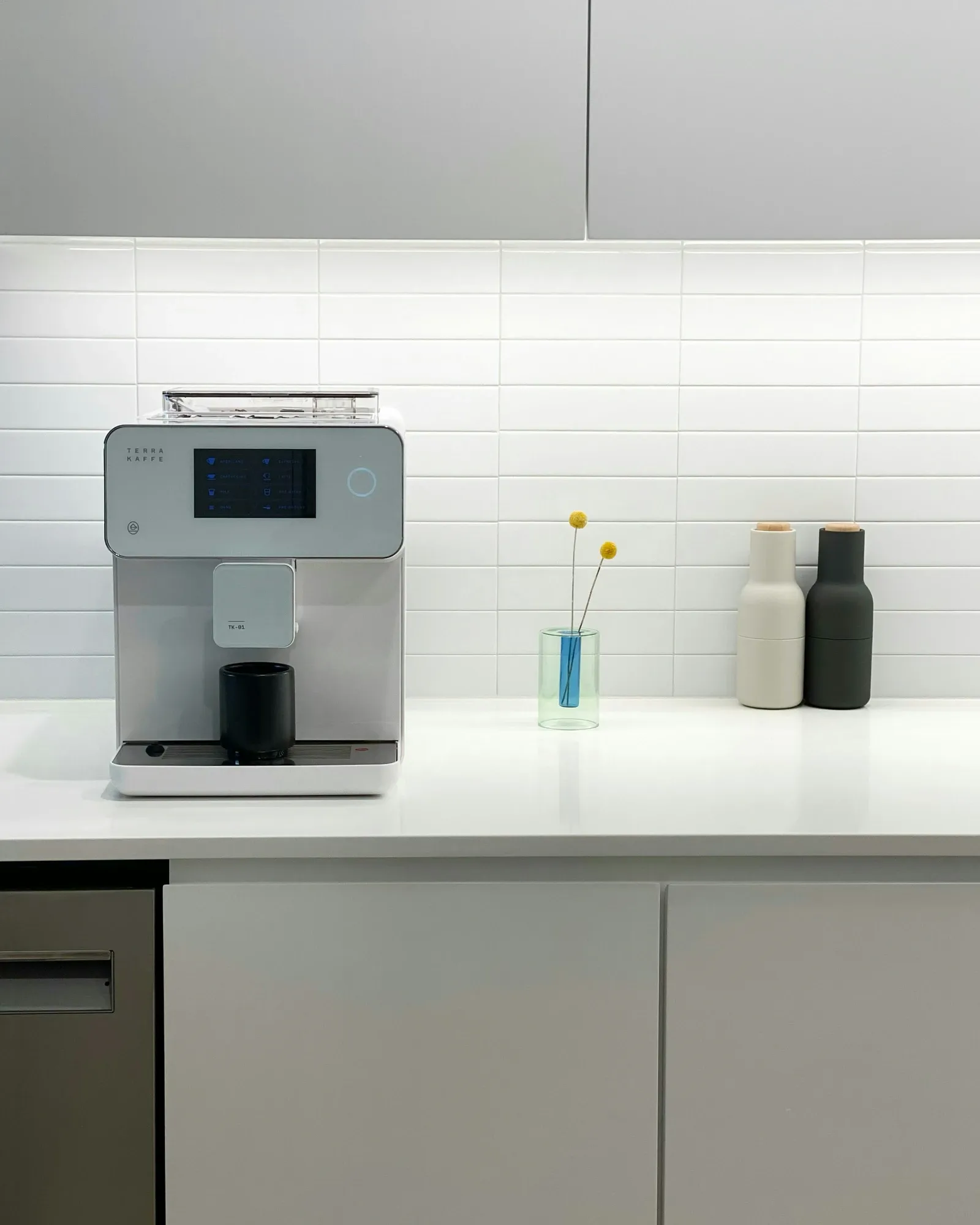
Store it there if you like, but don’t brew there. Breville’s manual for the Bambino Plus says not to use the machine inside a cabinet. Heat and steam need somewhere to go. If you want a hidden coffee bar, put the machine on a pull-out tray and slide it out to brew.
Fill-in fit worksheet
Measure these 5 numbers before you buy. Compare them with the table above.
| Measure | Your number | The machine fits when |
|---|---|---|
| A. Counter or cabinet top depth | ___ in | Machine depth + 2 in ≤ A |
| B. Gap from top to the shelf or cabinet above | ___ in | Machine height + 3 in ≤ B |
| C. Free width on the top | ___ in | Machine + grinder (about 5 in) + 6 in mug spot ≤ C |
| D. Distance to an outlet | ___ in | The cord reaches without an extension cord |
| E. Distance to the sink and trash | ___ ft | Short enough to refill the tank and dump pucks |
Best espresso machines under $200
Under $200 you get a pump machine with a steam wand and pressurized baskets. Both picks here use 51 mm portafilters, the smallest size in this guide.
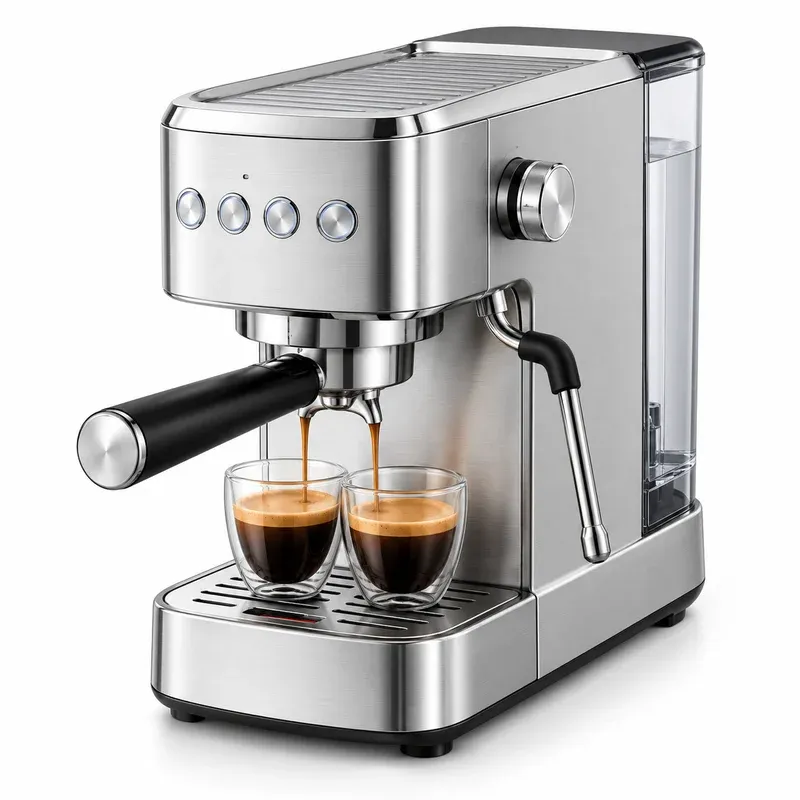
CASABREWS CM5418: lowest price with a pressure gauge
The CM5418 is the cheapest real espresso machine I’d consider, and at 5.5 inches it’s also the narrowest pick in this guide.
- Size: 5.5 × 12.3 × 12 in (CASABREWS)
- Water tank: 34 oz
- Portafilter: 51 mm aluminum, with dual-wall baskets
- Heating: PID-controlled; CASABREWS lists a 1-minute heat-up
- Price: $118.99 at CASABREWS, checked Oct 24, 2026
- With a grinder: about $319 with a Baratza Encore ESP ($199.95)
- Worth it if: you want to try espresso and milk drinks for the least money.
- Skip it if: you plan to fine-tune shots. The included dual-wall baskets do the work for you, which also limits how far you can push them.
Lowest price
CASABREWS CM5418 Espresso Machine
- Best for
- Trying espresso for the least money
- Why it's here
- A narrow 20-bar pump machine with a pressure gauge, PID temperature control, a 51 mm portafilter and a manual steam wand.
- Watch out
- Ships with dual-wall (pressurized) baskets and a plastic tamper; upgrade both if you buy a grinder.
- Price
- $ · Save
What we like
- Pro: Only 5.5 in wide
- Pro: Pressure gauge on the front
- Pro: Lowest price in our guide
Keep in mind
- Con: Small 34 oz tank
- Con: Pressurized baskets limit fine-tuning
Check Price on Amazon for CASABREWS CM5418 Espresso Machine (opens in a new tab)
Affiliate link · Price may change
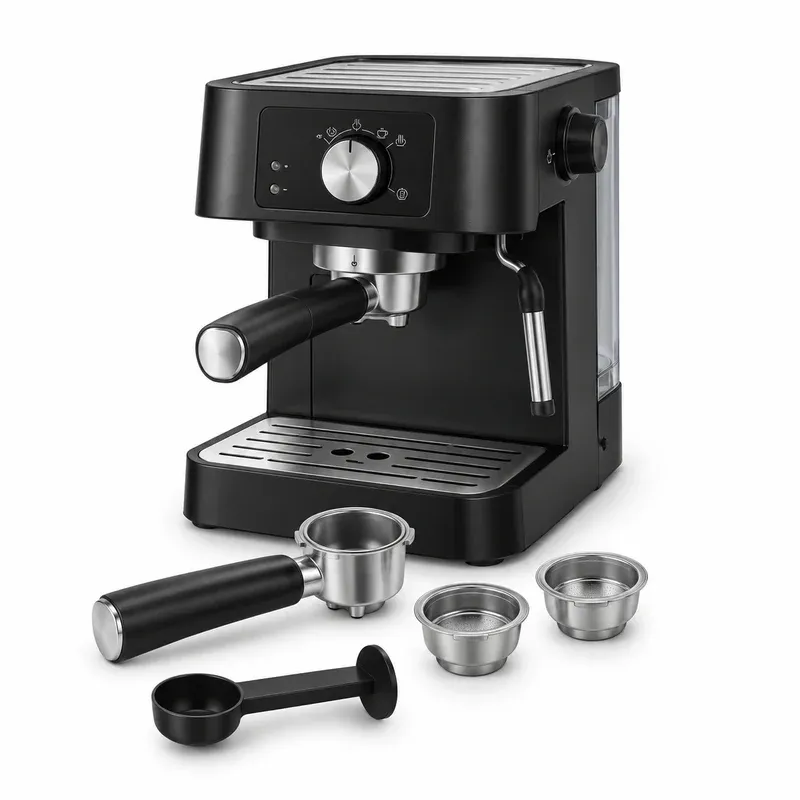
De’Longhi Stilosa: the starter machine reviewers agree on
The Stilosa is the budget pick Google’s summaries and most roundups land on. It has a stainless steel boiler, a 15-bar pump and a manual frother.
- Size: 8.1 × 13.5 × 11.2 in (De’Longhi), the shortest pick in this guide
- Water tank: 1 L (33.8 oz)
- Portafilter: 51 mm
- Heating: stainless steel boiler; De’Longhi doesn’t publish a warm-up time
- Cup clearance: cups up to 110 mm (about 4.3 in) with the two-level drip tray
- Price: $149.95 at De’Longhi, checked Oct 24, 2026
- With a grinder: about $350 with a Baratza Encore ESP
- Worth it if: you want lattes and cappuccinos with simple dial controls.
- Skip it if: you want latte art; the frother makes easy foam but gives you less control than a full steam wand.
Best budget
De'Longhi Stilosa Manual Espresso Machine (EC260BK)
- Best for
- A first machine for milk drinks on a small budget
- Why it's here
- De'Longhi's entry espresso machine: 15-bar pump, stainless steel boiler, a manual frother and a two-level drip tray for cups up to about 4.3 in tall.
- Watch out
- The frother is a panarello-style wand: easy foam, less control for latte art.
- Price
- $ · Save
What we like
- Pro: Shortest machine in our guide at 11.2 in
- Pro: Simple dial controls
- Pro: Wide service network
Keep in mind
- Con: Small 51 mm baskets
- Con: No temperature display or PID
Check Price on Amazon for De'Longhi Stilosa Manual Espresso Machine (EC260BK) (opens in a new tab)
Affiliate link · Price may change
Best espresso machines under $500
Between $280 and $550, the machines get faster heaters, better steam wands and, on the Breville and Gaggia picks, standard 54 mm or 58 mm baskets.
De’Longhi Dedica Deluxe: best for a narrow counter
The Dedica is 5.9 inches wide and made of metal, which suits a shelf nook or the end of a counter.
- Size: 5.9 × 13 × 12 in (De’Longhi: 149 × 330 × 305 mm)
- Water tank: 1.1 L (37 oz)
- Portafilter: 51 mm
- Heating: Thermoblock; De’Longhi doesn’t print a time, and reviewers report about 40 seconds
- Cup clearance: up to 120 mm (about 4.7 in)
- Price: $279.95 at De’Longhi, checked Oct 24, 2026
- With a grinder: about $480
- Worth it if: width is your tightest number.
- Skip it if: you want 54 mm accessories; 51 mm tampers and baskets have fewer choices.
Slimmest
De'Longhi Dedica Deluxe Espresso Machine (EC685M)
- Best for
- Narrow counters and shelf nooks
- Why it's here
- A 5.9-inch-wide metal espresso machine with a Thermoblock heater, a 1.1 L tank and an adjustable frothing wand, built for skinny counters.
- Watch out
- 13 in deep, so it needs a 15 in deep top to leave room for the cord and tank.
- Price
- $$ · Mid
What we like
- Pro: Slimmest machine in our guide
- Pro: Metal body
- Pro: Fits cups up to about 4.7 in tall
Keep in mind
- Con: 51 mm baskets
- Con: Steaming waits for the Thermoblock to switch modes
Check Price on Amazon for De'Longhi Dedica Deluxe Espresso Machine (EC685M) (opens in a new tab)
Affiliate link · Price may change
Breville Bambino: real espresso for under $300
The Bambino is the Bambino Plus without the automatic milk system. You get the same 54 mm portafilter and ThermoJet heater for $200 less.
- Size: 6.3 × 13.5 × 12 in (largest of Breville’s figures)
- Water tank: 47 oz (1.4 L)
- Portafilter: 54 mm
- Heating: ThermoJet, which Breville rates at 3 seconds
- Price: $299.95 at Breville, checked Oct 24, 2026
- With a grinder: about $500
- Worth it if: you drink straight espresso or don’t mind steaming milk by hand.
- Skip it if: you want hands-free foam; that’s the Bambino Plus.
Best under $300
Breville Bambino Espresso Machine (BES450BSS)
- Best for
- Real espresso on a narrow counter for under $300
- Why it's here
- Breville's smallest espresso machine: 54 mm portafilter, ThermoJet heating rated at 3 seconds, a 1.4 L tank and a manual steam wand.
- Watch out
- Manual steam wand only; the Bambino Plus adds automatic milk texturing.
- Price
- $$ · Mid
What we like
- Pro: About 6.3 in wide
- Pro: Ready in seconds
- Pro: 54 mm baskets and tamper included
Keep in mind
- Con: Grinder is extra
- Con: Manual steaming takes practice
Check Price on Amazon for Breville Bambino Espresso Machine (BES450BSS) (opens in a new tab)
Affiliate link · Price may change
Breville Bambino Plus: best overall
Serious Eats calls the Bambino Plus its favorite home espresso machine, and Google’s summaries put it first too. It pairs fast heating and PID control with an automatic steam wand that textures milk to the temperature and foam level you pick.
- Size: 7.7 × 14.3 × 12.2 in (largest of Breville’s figures)
- Water tank: 64 oz (1.9 L)
- Portafilter: 54 mm; a tamper and a 16 oz milk jug come in the box
- Heating: ThermoJet with PID, rated at 3 seconds; low-pressure pre-infusion
- Price: $499.95 at Breville, checked Oct 24, 2026
- With a grinder: about $700
- Worth it if: you drink lattes and want them consistent on busy mornings.
- Skip it if: your top is under 16.5 inches deep.
Best overall
Breville Bambino Plus Espresso Machine (BES500BSS)
- Best for
- Latte drinkers who want milk done for them
- Why it's here
- A compact 54 mm machine with ThermoJet heating Breville rates at 3 seconds, PID control, pre-infusion and an automatic steam wand that textures milk hands-free.
- Watch out
- No grinder. Budget $200 or more for one, or buy fresh pre-ground and use the dual-wall baskets.
- Price
- $$$ · Splurge
What we like
- Pro: Hands-free milk texturing
- Pro: Ready in 3 seconds
- Pro: Under 8 in wide
Keep in mind
- Con: Grinder is extra
- Con: Breville's manual says not to run it inside a cabinet
Check Price on Amazon for Breville Bambino Plus Espresso Machine (BES500BSS) (opens in a new tab)
Affiliate link · Price may change
Gaggia Classic E24: best for learning manual espresso
The Classic is the enthusiast pick most guides name. The current model is sold as the Classic E24 (some retailers call it the Classic Pro E24; earlier versions were the Classic Pro and Classic Evo Pro).
- Size: 9.5 × 10.6 × 14.2 in (largest of Gaggia’s and the listing’s figures)
- Water tank: 2.1 L (71 oz), removable from the front
- Portafilter: 58 mm stainless, commercial size
- Heating: single aluminum boiler; Gaggia says it’s ready in under 10 minutes from cold
- Price: about $499 to $549 at US espresso retailers, checked Oct 24, 2026
- With a grinder: about $700 with an Encore ESP; Daniel Norris’s buying guide puts a Classic Pro setup at $800 to $1,100 with the grinders he recommends
- Worth it if: you want 58 mm baskets, a commercial steam wand and a machine people keep for years.
- Skip it if: you want speed. There’s no PID, so you learn the boiler’s timing yourself.
Best for enthusiasts
Gaggia Classic E24 Espresso Machine (RI9380/46)
- Best for
- Hobbyists who want to learn manual espresso
- Why it's here
- The latest Gaggia Classic (sold as the Classic Pro E24, formerly Classic Evo Pro): a made-in-Italy single boiler, a commercial-style 58 mm portafilter and a commercial steam wand.
- Watch out
- Gaggia says it's ready in under 10 minutes from cold; there's no PID, so shots vary more until you learn its rhythm.
- Price
- $$$ · Splurge
What we like
- Pro: 58 mm commercial portafilter
- Pro: Tank pulls out the front
- Pro: Huge aftermarket for parts
Keep in mind
- Con: Up to 10 min warm-up
- Con: Manual learning curve
Check Price on Amazon for Gaggia Classic E24 Espresso Machine (RI9380/46) (opens in a new tab)
Affiliate link · Price may change
Best espresso machines under $1,000
From $600 to $800 you can buy the grinder inside the machine. The trade-off is size: all 3 picks here are 12.5 to 13.6 inches wide and 14.6 to 16.6 inches tall.
Ninja Luxe Café Premier: best 3-in-1 for mixed households
The Luxe Café brews espresso, drip-style coffee and cold brew from whole beans, with a built-in conical burr grinder, a scale for weight-based dosing, an assisted tamper and hands-free frothing.
- Size: 13.6 × 13.2 × 14.6 in (Abt listing)
- Water tank: 70 oz
- Grinder: conical burr, 25 settings
- Portafilter: Ninja doesn’t publish the size
- Heating: Thermoblock
- Price: $599.99 at Nebraska Furniture Mart and P.C. Richard, checked Oct 24, 2026
- With a grinder: built in, so about $600 all in
- Worth it if: one person drinks lattes and another drinks a mug of coffee.
- Skip it if: counter width is tight; it’s the widest machine under $1,000 here.
Best 3-in-1
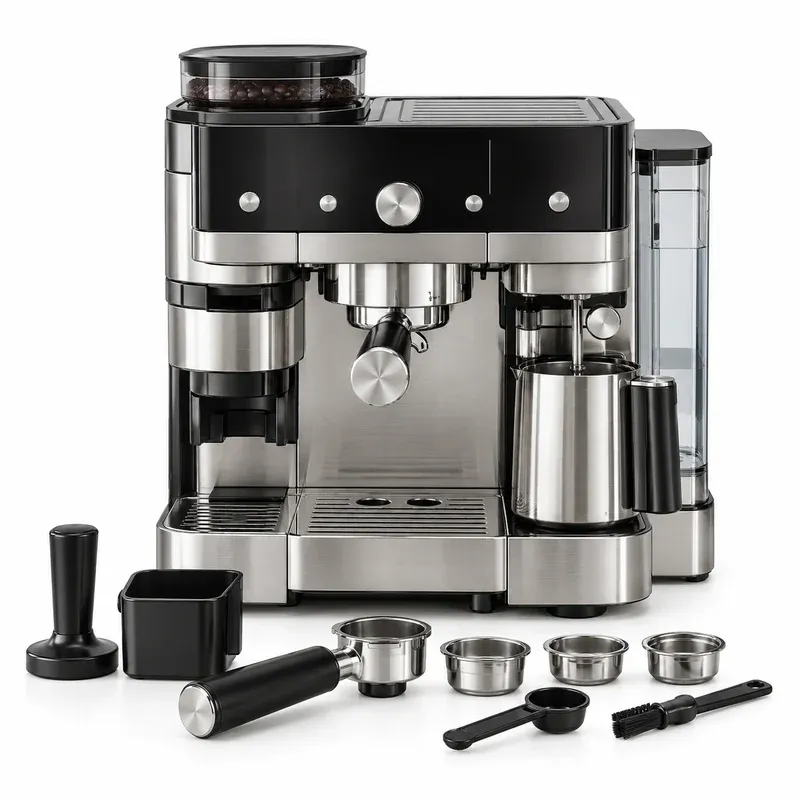
Ninja Luxe Café Premier 3-in-1 Espresso Machine (ES601)
- Best for
- Households split between espresso and drip coffee
- Why it's here
- Espresso, drip coffee and cold brew in one machine, with a built-in conical burr grinder (25 settings), weight-based dosing, an assisted tamper and hands-free frothing.
- Watch out
- 13.6 in wide and 14.6 in tall: the biggest footprint among our sub-$1,000 picks.
- Price
- $$$ · Splurge
What we like
- Pro: Grinder, scale and tamper built in
- Pro: Also brews drip and cold brew
- Pro: Guided settings for beginners
Keep in mind
- Con: Large footprint
- Con: Less hands-on control than a manual machine
Affiliate link · Price may change
Breville Barista Express: the classic all-in-one
The Barista Express puts a conical burr grinder, a 54 mm portafilter, a pressure gauge and a steam wand in one box.
- Size: 12.5 × 13.8 × 15.9 in, including the bean hopper
- Water tank: 67 oz (2 L)
- Portafilter: 54 mm stainless
- Heating: Thermocoil, 1600 W; Breville doesn’t publish a warm-up time
- Price: $699.95 at Breville, checked Oct 24, 2026
- With a grinder: built in
- Worth it if: you want one box and you have 18 inches or more above the counter.
- Skip it if: you have 15-inch uppers; it won’t fit under them.
Classic all-in-one
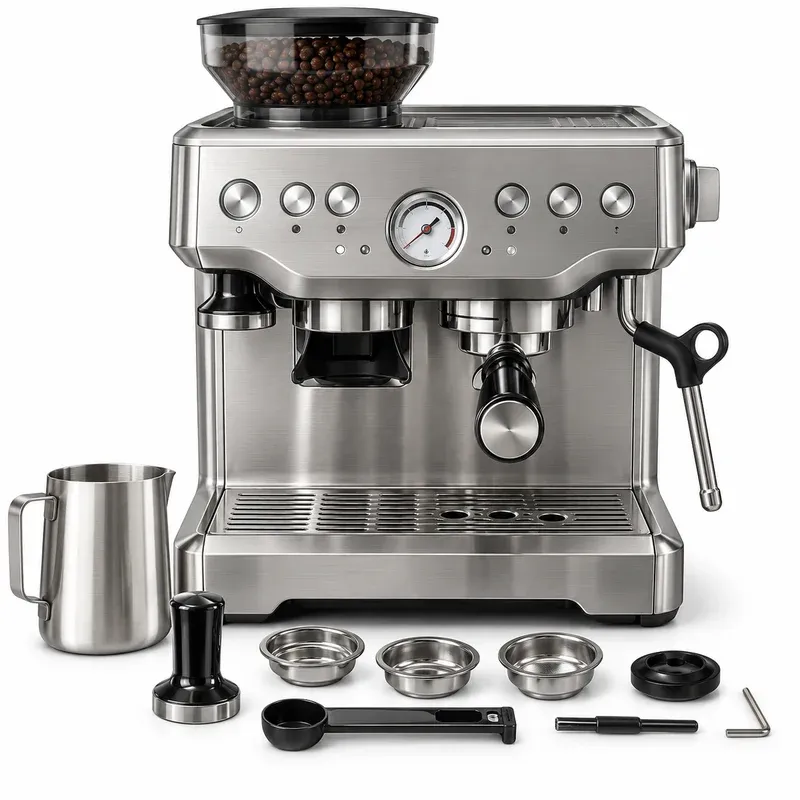
Breville Barista Express Espresso Machine (BES870XL)
- Best for
- One-box espresso with a grinder built in
- Why it's here
- Breville's best-known all-in-one: a conical burr grinder, a 54 mm portafilter, a Thermocoil heater, a pressure gauge and a manual steam wand.
- Watch out
- 15.9 in tall with the bean hopper, so check the gap under upper cabinets.
- Price
- $$$ · Splurge
What we like
- Pro: Grinder included
- Pro: Pressure gauge
- Pro: Big 67 oz tank
Keep in mind
- Con: Tall hopper needs clearance
- Con: Built-in grinder has less range than a separate one
Check Price on Amazon for Breville Barista Express Espresso Machine (BES870XL) (opens in a new tab)
Affiliate link · Price may change
Breville Barista Express Impress: best with a built-in grinder
The Impress adds Breville’s Impress Puck System to the Barista Express: it doses for you and assists the tamp, which cuts the mess and guesswork that put beginners off.
- Size: 13 × 15 × 16.6 in (Breville Canada lists 33 × 38 × 42 cm)
- Water tank: 67 oz (2 L)
- Portafilter: 54 mm stainless
- Heating: Thermocoil with PID
- Grinder: 25 settings, 250 g bean hopper
- Price: $799.95 at Breville, checked Oct 24, 2026
- Worth it if: you want the grinder and help with dose and tamp in one machine.
- Skip it if: your upper cabinets sit 18 inches up or less; it leaves only about 1.4 inches.
Best with grinder
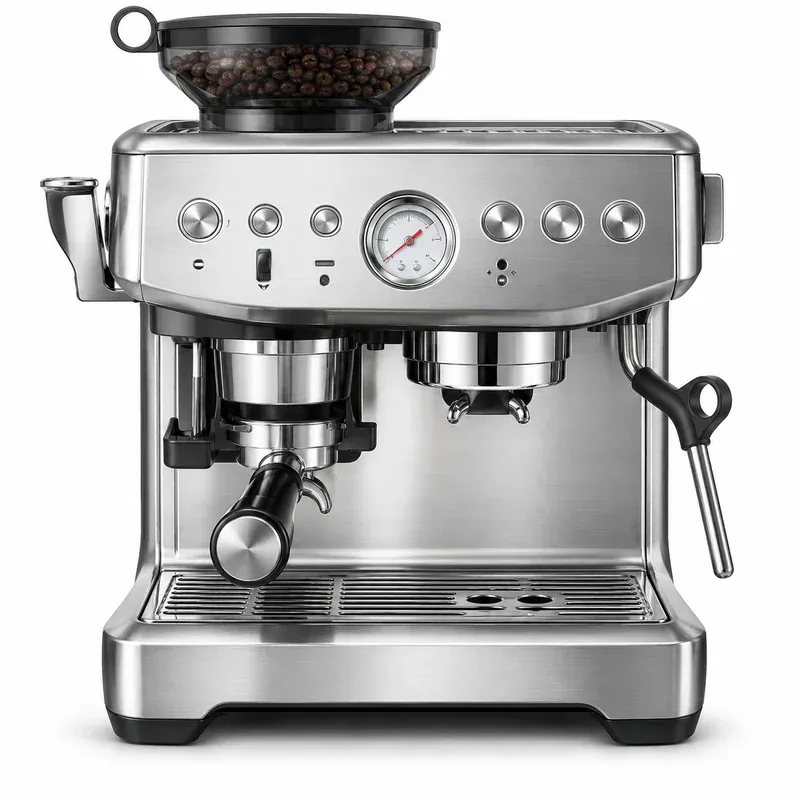
Breville Barista Express Impress (BES876BSS)
- Best for
- Beginners who want help with dose and tamp
- Why it's here
- The Barista Express with Breville's Impress Puck System: intelligent dosing and assisted tamping, a 25-setting grinder, Thermocoil heating with PID and a 2 L tank.
- Watch out
- The tallest pick in our guide at about 16.6 in.
- Price
- $$$ · Splurge
What we like
- Pro: Assisted tamping cuts mess
- Pro: Grinder and dosing built in
- Pro: Pressure gauge
Keep in mind
- Con: Needs about 19 in under upper cabinets
- Con: Deep at 15 in
Check Price on Amazon for Breville Barista Express Impress (BES876BSS) (opens in a new tab)
Affiliate link · Price may change
Best espresso machine over $1,000
Above $1,000 the machines move to dual boilers, 58 mm commercial groups and more precise temperature control.
Rancilio Silvia Pro X: best upgrade
The Silvia Pro X is Rancilio’s dual boiler take on its long-running Silvia. It has a 0.3 L brew boiler and a 1 L steam boiler, each with its own PID, plus soft preinfusion, a shot timer on the front display and a programmable wake-up time. Because the boilers are separate, you can pull a shot while you steam milk.
- Size: 10 W × 16.5 D × 15.3 H in (largest of Rancilio’s 250 × 420 × 390 mm and the Amazon listing’s 10 × 16.5 × 15.2 in); about 44 lb
- Water tank: 2 L (68 oz), removable
- Portafilter: 58 mm stainless
- Heating: dual boiler with 2 PIDs; the Amazon listing gives about 15 minutes to warm up
- Price: splurge tier, a little over $2,000 (check the current price on Amazon)
- With a grinder: about $2,395 with an Encore ESP; most owners at this level pair it with a pricier grinder
- Worth it if: you make milk drinks back to back and don’t want to wait between the shot and the steam.
- Skip it if: your top is under 18.5 inches deep or your upper cabinets sit less than 18 inches above the counter.
Best upgrade
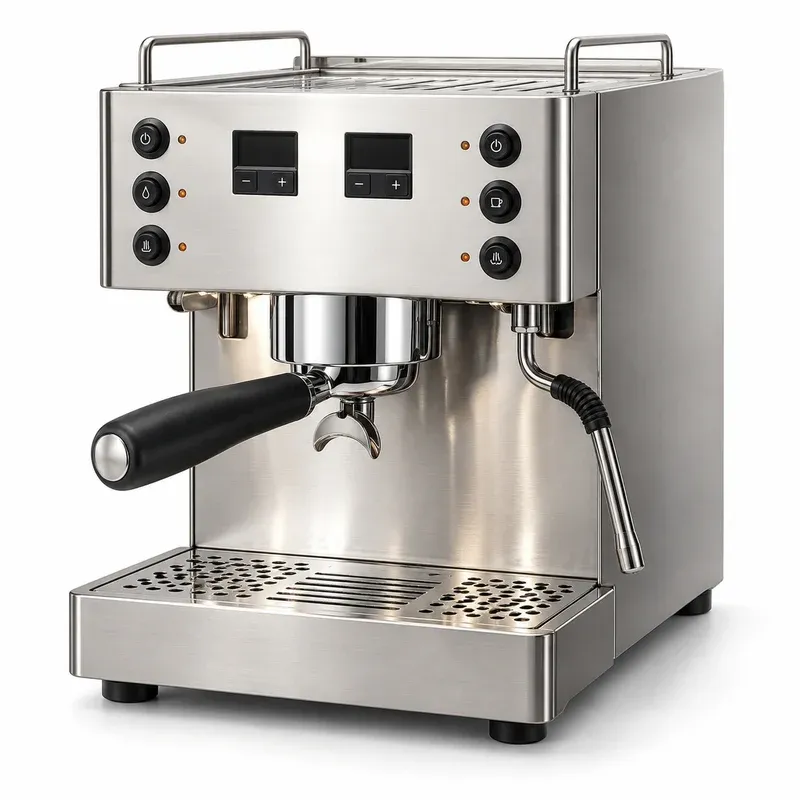
Rancilio Silvia Pro X Espresso Machine, Stainless Steel
- Best for
- Milk drinks back to back on prosumer-grade parts
- Why it's here
- A dual boiler machine from Rancilio with a 0.3 L brew boiler, a 1 L steam boiler, 2 PIDs, soft preinfusion, a shot timer and a 2 L tank. It brews and steams at the same time.
- Watch out
- Deep at 16.5 in and about 44 lb (Rancilio), so it needs an 18.5 in deep top and a sturdy shelf.
- Price
- $$$ · Splurge
What we like
- Pro: Brews and steams at once
- Pro: Dual PID and shot timer
- Pro: Programmable wake-up
Keep in mind
- Con: The priciest machine in the guide
- Con: Deep at 16.5 in
Affiliate link · Price may change
Other machines over $1,000 that the big roundups mention, which I didn’t include because I couldn’t confirm current US specs and prices for them on the same day: the Breville Barista Touch and Oracle Jet (Wirecutter’s runner-up and upgrade picks), Fellow’s Series 1, and super-automatics like the Terra Kaffe TK-02.
Best espresso machines for beginners
The 3 easiest machines in this guide each take one hard step off your plate: the Bambino Plus froths milk for you, the Barista Express Impress helps with dose and tamp, and the Ninja Luxe Café does both.
- Breville Bambino Plus ($499.95): heats in 3 seconds by Breville’s rating, and the automatic wand textures milk while you do something else. You still grind and tamp.
- Breville Barista Express Impress ($799.95): grinds, doses and assists the tamp, so your first shots look like your tenth. You steam milk by hand.
- Ninja Luxe Café Premier ($599.99): grinds by weight, assists the tamp and froths hands-free. It’s the most guided machine here, with the least room to experiment.
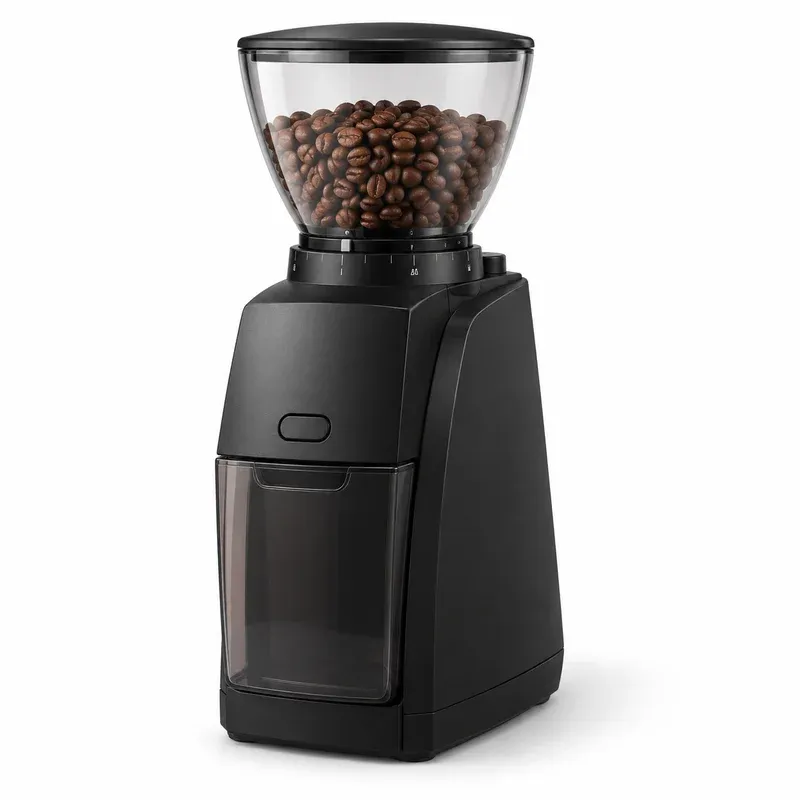
The thing beginners forget to budget for is the grinder. A machine without one needs freshly ground espresso, and grind matters more than the machine for how a shot tastes. The Baratza Encore ESP ($199.95 at Baratza) is the entry espresso grinder I’d start with: 40 mm conical burrs, a 300 g hopper, and a footprint of about 5.1 × 5.9 × 13.4 inches. If you’d rather not grind, buy fresh pre-ground espresso and use the dual-wall baskets that come with the Breville, De’Longhi and CASABREWS machines.
Grinder to pair
Baratza Encore ESP Coffee Grinder
- Best for
- Someone ready to grind fresh for every brew style
- Why it's here
- Baratza's updated Encore with a dual-range dial: fine steps for espresso and wider steps from pour-over to French press.
- Watch out
- Big step up in price from hand grinders. Make sure they buy whole beans.
- Price
- $$$ · Splurge
What we like
- Pro: Grinds for every brewer they own
- Pro: Repairable, with parts sold by Baratza
- Pro: Simple front-dial controls
Keep in mind
- Con: Loud, like most electric grinders
- Con: Takes counter space
Check Price on Amazon for Baratza Encore ESP Coffee Grinder (opens in a new tab)
Affiliate link · Price may change
Best compact espresso machines for small coffee bars
The narrowest machines in this guide, from slimmest to widest, are:
- CASABREWS CM5418: 5.5 in wide, 12 in tall
- De’Longhi Dedica Deluxe: 5.9 in wide, 12 in tall
- Breville Bambino: 6.3 in wide, 12 in tall
- Breville Bambino Plus: 7.7 in wide, 12.2 in tall
- De’Longhi Stilosa: 8.1 in wide, 11.2 in tall
- Gaggia Classic E24: 9.5 in wide, 14.2 in tall
- Rancilio Silvia Pro X: 10 in wide, 15.3 in tall
Any of the first 5 plus a 5-inch grinder and a 6-inch mug spot fits in about 17 to 20 inches of counter. That’s a 24-inch countertop coffee station with room for a canister. Our countertop coffee station guide has 24-, 36- and 48-inch layouts, and the fit worksheet above checks the shelf above.
For a coffee bar on a small cabinet, the shallow Gaggia (10.6 inches deep) is the easiest fit on a 15-inch top, even though it’s wider.
Best espresso machines for lattes and cappuccinos
The milk system matters more than the shot for latte drinkers. The machines here fall into 3 groups:
- Automatic milk: Bambino Plus (automatic steam wand with temperature and foam settings) and Ninja Luxe Café (hands-free frothing). Best if you want the same latte every day.
- Manual steam wand: Bambino, Barista Express, Barista Express Impress, CASABREWS, Gaggia Classic E24 and Rancilio Silvia Pro X. Best if you want to learn microfoam and latte art.
- Simple frother: Stilosa and Dedica. Easier foam, less control.
Only one of the 10 machines, the Rancilio Silvia Pro X, brews and steams at the same moment. The other 9 heat for one job, then switch. That’s what heat exchanger and dual boiler machines fix, and it’s why the Silvia Pro X costs more than four times as much as a Bambino Plus.
How much does a full espresso setup cost?
A home espresso setup costs the machine plus a grinder plus a few tools. The table below adds the Baratza Encore ESP ($199.95) to each machine that doesn’t have a grinder built in, using list prices checked October 24, 2026.
| Machine | Machine price | Grinder | Machine + grinder |
|---|---|---|---|
| CASABREWS CM5418 | $118.99 (CASABREWS) | Encore ESP $199.95 | about $319 |
| De'Longhi Stilosa | $149.95 (De'Longhi) | Encore ESP $199.95 | about $350 |
| De'Longhi Dedica Deluxe | $279.95 (De'Longhi) | Encore ESP $199.95 | about $480 |
| Breville Bambino | $299.95 (Breville) | Encore ESP $199.95 | about $500 |
| Ninja Luxe Café Premier | $599.99 (NFM, P.C. Richard) | Built in | about $600 |
| Gaggia Classic E24 | $499 to $549 (US espresso retailers) | Encore ESP $199.95 | about $699 to $749 |
| Breville Bambino Plus | $499.95 (Breville) | Encore ESP $199.95 | about $700 |
| Breville Barista Express | $699.95 (Breville) | Built in | about $700 |
| Breville Barista Express Impress | $799.95 (Breville) | Built in | about $800 |
| Rancilio Silvia Pro X | about $2,000+ | Encore ESP $199.95 | about $2,200+ |
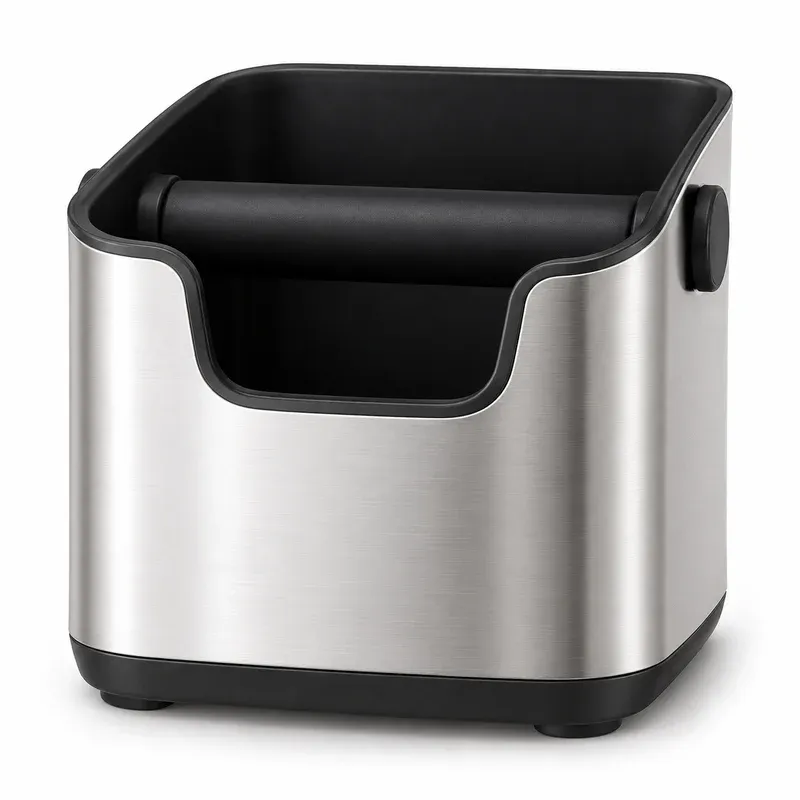
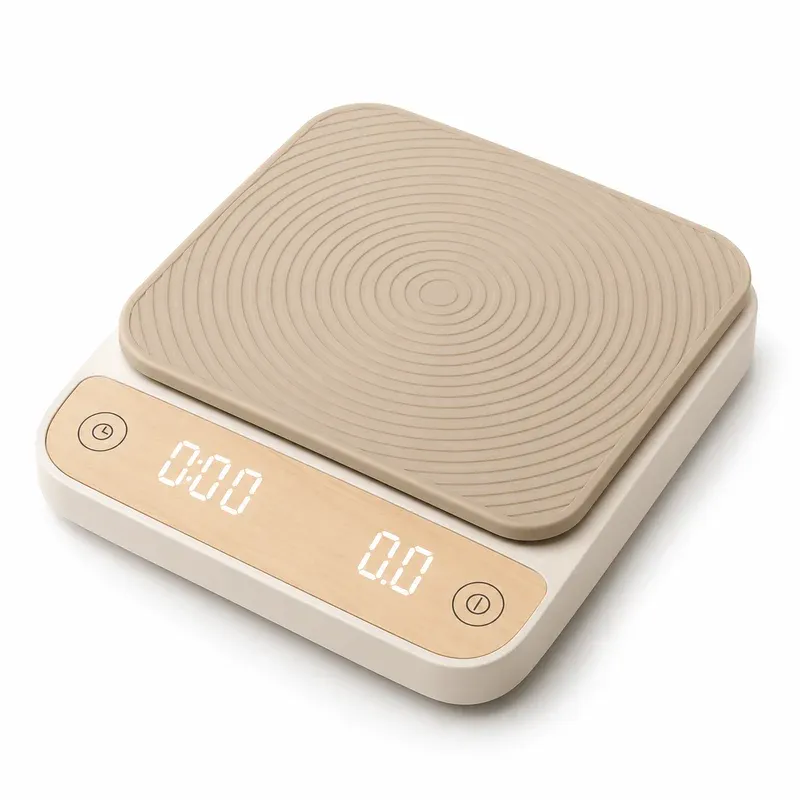
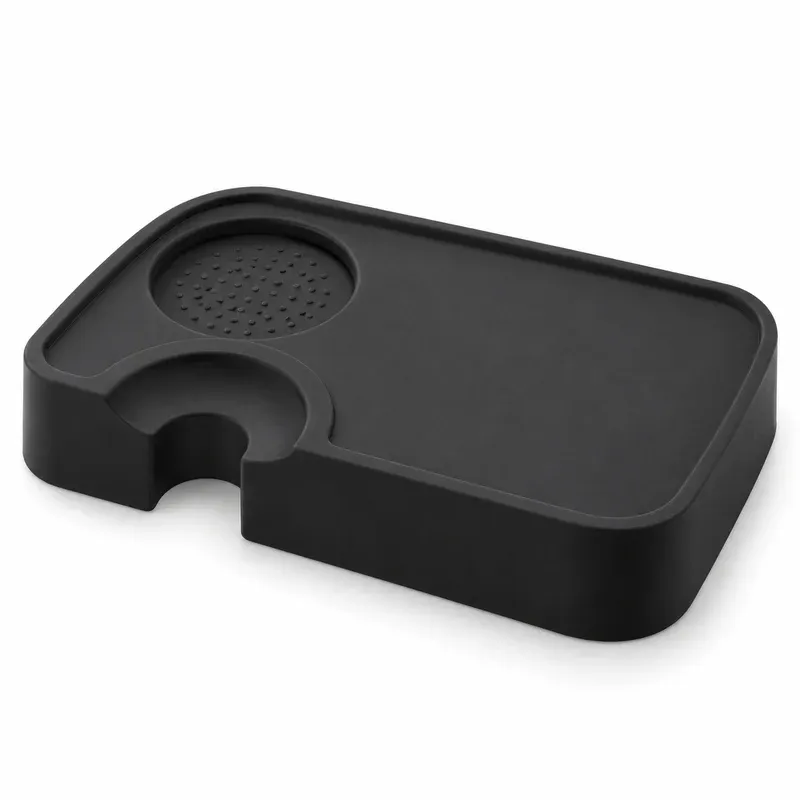
Then add the small tools. A knock box for spent pucks (Breville’s Knock Box 10 is $33.95 at Breville), a 0.1-gram scale and a tamping mat cover most of it. The Bambino Plus already includes a tamper and a 16-ounce milk jug; check the box contents of other machines before you buy a jug.
Tools to finish the setup
Is a home espresso machine worth it?
It is if you buy espresso drinks often. Daniel Norris’s home espresso guide, one of the top 10 results for this search, puts a home latte at about $1.50 against about $5 at a café, a saving of about $3.50 a drink. At that rate, a $700 setup covers its cost in about 200 drinks: roughly 7 months at one latte a day, or about 4 years at one a week. If you’re in the second group, a pod machine or a moka pot costs less.
Espresso machine types explained
Home espresso machines come in 4 main types: single-heater semi-automatics, heat exchangers, dual boilers and super-automatics.
- Single-heater semi-automatic: one thermoblock, thermocoil or small boiler heats water for brewing, then for steam. You grind, tamp and start the shot. Nine of the 10 machines in this guide are this type.
- Heat exchanger: one large steam boiler with a tube that runs brew water through it, so you can brew and steam at once.
- Dual boiler: separate boilers for brew water and steam, each at its own temperature. The most control, and the most counter space and money. The Rancilio Silvia Pro X is the one dual boiler in this guide.
- Super-automatic: grinds, doses, tamps, brews and often froths at the press of a button. The Ninja Luxe Café sits between this and a semi-automatic.
PID control is an electronic thermostat that holds brew temperature steady. The Bambino Plus, Barista Express Impress, CASABREWS and Rancilio Silvia Pro X (one PID per boiler) list it; the Gaggia Classic E24 doesn’t.
Portafilter size decides which tampers, baskets and dosing cups fit. In this guide: 51 mm (CASABREWS, Stilosa, Dedica), 54 mm (all 4 Brevilles) and 58 mm (Gaggia, Rancilio), the commercial size.
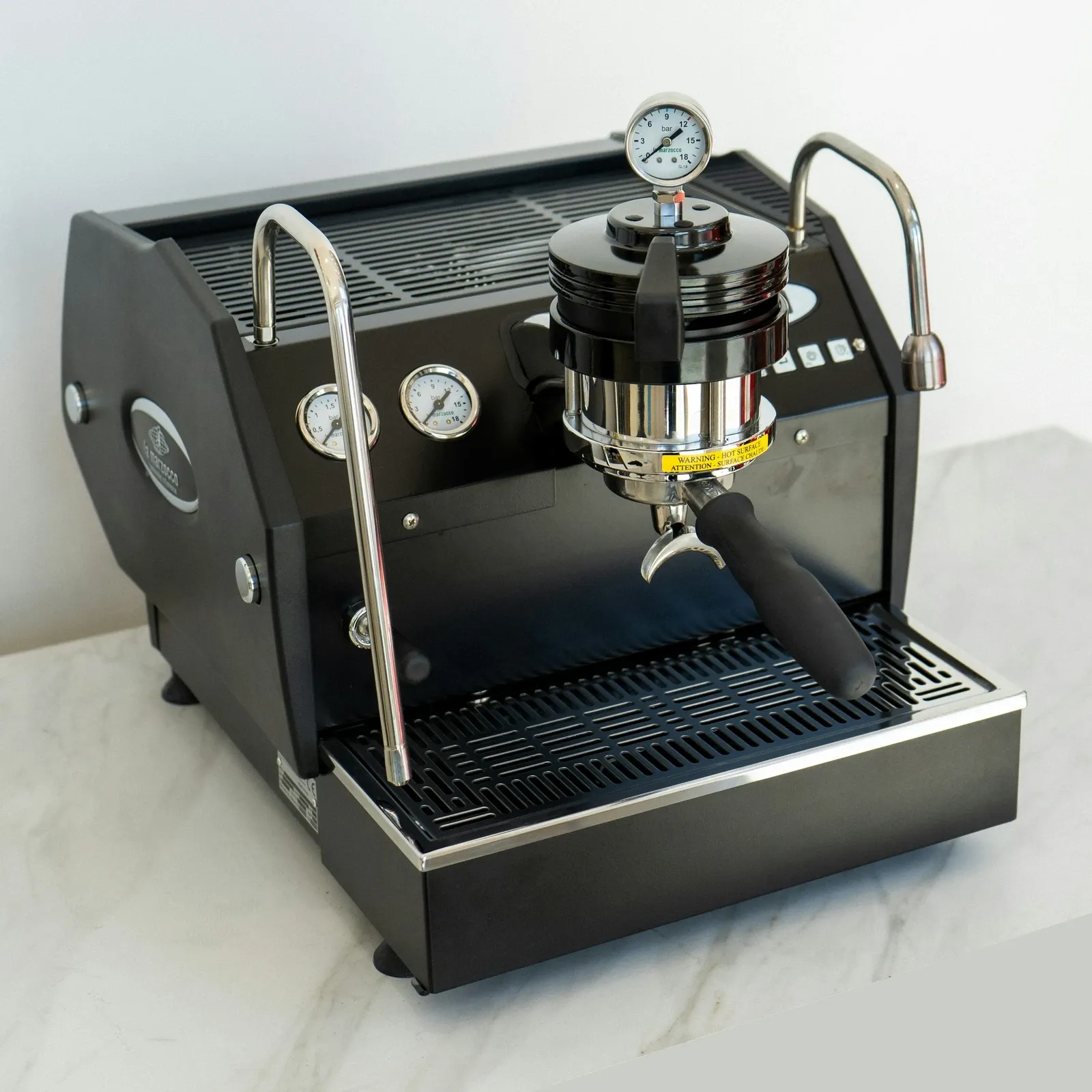
Stovetop espresso makers
A moka pot makes strong, espresso-style coffee on the stove without a pump. It’s the cheapest way into espresso drinks, but it doesn’t reach a pump machine’s pressure, so you won’t get the same crema. It also needs no outlet and no counter space when you’re done.
Breville vs De’Longhi vs Gaggia
Breville gives you more control, De’Longhi costs less and keeps things simple, and Gaggia gives you commercial-size parts. The table below compares the brands using only the machines in this guide.
| Brand | Machines in this guide | Price range | Portafilter | Heating |
|---|---|---|---|---|
| Breville | Bambino, Bambino Plus, Barista Express, Barista Express Impress | $299.95 to $799.95 | 54 mm | ThermoJet or Thermocoil |
| De'Longhi | Stilosa, Dedica Deluxe | $149.95 to $279.95 | 51 mm | Boiler or Thermoblock |
| Gaggia | Classic E24 | $499 to $549 | 58 mm | Single aluminum boiler |
| CASABREWS | CM5418 | $118.99 | 51 mm | PID-controlled |
| Ninja | Luxe Café Premier | $599.99 | Not published | Thermoblock |
| Rancilio | Silvia Pro X | about $2,000+ | 58 mm | Dual boiler, 2 PIDs |
Breville also owns Baratza, the grinder maker in this guide, and builds Nespresso machines.
Espresso machine vs coffee maker vs pod machine
Pick an espresso machine if you drink lattes, cappuccinos or straight espresso most days. Pick a drip coffee maker if your house drinks mugs of coffee by the pot, and a pod machine if you want one cup in a minute with no grinding or cleaning. Espresso takes the most counter space and the most daily cleanup: you dump the puck, purge the steam wand and wipe the drip tray every time. Our coffee bar essentials list covers what each brewer needs around it.
Giving an espresso machine as a gift
An espresso machine is a gift for someone who already buys espresso drinks, not for someone you hope will start. Peek at their counter first: if there’s a grinder, a Bambino or Bambino Plus is an easy pick. If there’s no grinder and no room for one, an all-in-one like the Barista Express or Ninja Luxe Café is safer. Then add one small extra so it’s ready to use on the day.
Accessories that complete the gift
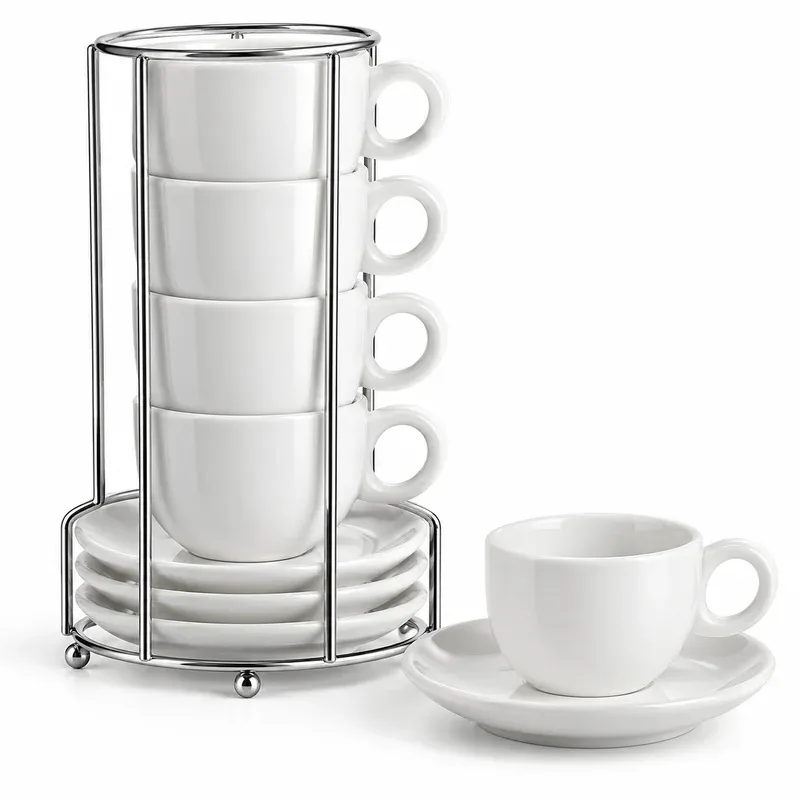
More ideas by budget are in our gifts for coffee lovers guide.
How I chose these machines
I started with the machines the top-ranking reviews agree on: Serious Eats’ favorite (the Bambino Plus) and the budget, enthusiast and built-in-grinder picks that Google’s summaries repeat (the Stilosa, Gaggia Classic and Barista Express Impress). I added the Bambino, Dedica, CASABREWS, Barista Express and Ninja Luxe Café to cover every budget and counter size, and the Rancilio Silvia Pro X as the dual boiler upgrade.
Then I checked each machine’s size, tank, portafilter, heating and warm-up on the maker’s page or manual, and cross-checked sizes against a second listing. Where they disagreed, I used the larger number. Prices are list prices from the maker or a named retailer on October 24, 2026.
I haven’t run all 10 machines side by side, so this guide doesn’t rate taste or steam power. It tells you which machines the reviewers agree on, what each one needs from your coffee bar, and what the whole setup costs. For the furniture side, our coffee bar cabinet guide and coffee bar ideas pick up from here, and the coffee machines hub will collect our machine guides as they go live.
Frequently asked questions
What is the best espresso machine for home use?
For most homes, the Breville Bambino Plus: it heats in 3 seconds by Breville's rating, textures milk on its own and is under 8 inches wide, but you need a grinder. If you want the grinder built in, the Barista Express Impress. On a small budget, the De'Longhi Stilosa or the CASABREWS CM5418.
How much should I spend on an espresso machine?
Budget for the machine and a grinder together. In this guide that's about $320 to $350 for a starter setup (CASABREWS or Stilosa plus a Baratza Encore ESP), about $700 for a Bambino Plus or Gaggia Classic with the same grinder, and $600 to $800 for machines with a grinder built in.
Is Breville better than De'Longhi?
They aim at different buyers. Breville's machines in this guide use 54 mm portafilters and fast ThermoJet or Thermocoil heaters, and cost $300 to $800. De'Longhi's Stilosa and Dedica use 51 mm portafilters and cost $150 to $280. Breville gives you more control; De'Longhi costs less and is simpler.
Is an espresso machine worth it at home?
It is if you buy espresso drinks often. One SERP-ranking cost breakdown puts a home latte at about $1.50 against about $5 at a café, so a $700 setup pays for itself in roughly 200 drinks. If you drink one latte a week, a pod machine or a moka pot is cheaper.
How much space does an espresso machine need?
Most machines in this guide need a counter or cabinet top at least 2 inches deeper than the machine, plus 6 inches of width for a mug and 5 inches for a separate grinder. Under 18-inch upper cabinets, the compact machines leave about 6 inches above; the Barista Express Impress leaves only about 1.4 inches.
Do I need a separate grinder for an espresso machine?
Yes, unless the machine has one built in, like the Barista Express, Barista Express Impress or Ninja Luxe Café. Espresso needs a fine, even grind. Without a grinder, buy fresh pre-ground espresso and use the dual-wall (pressurized) baskets most of these machines include.
Can I use an espresso machine under kitchen cabinets?
Yes, if the gap leaves room to open the lid, fill the tank and let steam escape. Check the machine's height against your gap, and pull it forward while steaming. Breville's manual for the Bambino Plus says not to use it inside a cabinet.
Free coffee bar size worksheet
Six numbers to measure before you buy a cabinet, cart or machine, plus a page of typical machine sizes and cabinet clearances.