
Wood Coffee Bar Ideas: Wooden Coffee Stations, Butcher Block and Decor
This post has affiliate links. If you buy through them, I may earn a small commission at no extra cost to you. As an Amazon Associate I earn from qualifying purchases. How I pick products
On this page
A wood coffee bar is a coffee station built around real or wood-look surfaces: a solid wood cabinet, a butcher block counter, open wooden shelves, or simply wood accessories on a plain counter. Wood makes a coffee corner feel warm in a way white laminate never does. It hates standing water, though, so the best wood coffee station ideas pair the look with a finish and a mat that keep drips off.
Below are 20 wood coffee bar ideas, grouped by solid wood furniture, butcher block, light wood, dark wood, wall decor and accessories. Each one lists the space it needs, a rough cost and the pieces to copy it. I researched these from maker specs, product listings and wood data; I haven’t tested the products myself.
What makes a wood coffee bar look good (and last)
Three rules keep a wood coffee bar from looking like a pile of brown furniture:
- One main wood. The biggest piece (cabinet, counter or shelf) sets the tone. Everything else is clearly lighter, clearly darker, or not wood at all.
- Wood three times. Repeat the main wood in at least three places: the counter, a shelf and a tray, for example. Once looks accidental, three times looks planned.
- A plan for water. Every coffee bar drips. A sealed top, a mat under the machine and a coaster habit protect the wood more than any species choice.
Pick the wood: hardness and water resistance compared
The two numbers that matter on a coffee bar are hardness (does a dropped portafilter dent it?) and how the wood reacts to water. The table below pulls both from The Wood Database. Janka hardness is the force needed to press a steel ball halfway into the wood, so higher means fewer dents.
| Wood | Janka hardness | Decay and water resistance | Look | Best coffee bar use |
|---|---|---|---|---|
| Hard maple | 1,450 lbf | Non-durable; needs a good seal | Pale cream, tight grain | Butcher block tops, light wood bars |
| White oak | 1,350 lbf | Very durable; used for barrels and boats | Warm tan, straight grain | Counters and shelves near the machine |
| Yellow birch | 1,260 lbf | Perishable if left wet | Light, even | Shelves and cabinet boxes |
| Red oak | 1,220 lbf | Non-durable; stains where water sits in the pores | Pinkish tan, open grain | Shelves and frames away from drips |
| Teak | 1,070 lbf | Very durable; the decay benchmark | Golden brown, oily | Trays and mid-century pieces |
| Black walnut | 1,010 lbf | Very durable against decay | Chocolate brown | Accent tops, shelves, tools |
| Rubberwood | 960 lbf | Perishable; budget furniture wood | Light, plain | Painted or stained flat-pack pieces |
| Eastern white pine | 380 lbf | Moderate to low | Knotty, yellow | Rustic and farmhouse cabinets you paint or stain |
Two things the table tells you. Maple is the hardest but needs sealing; white oak is nearly as hard and copes with water better. Pine is soft enough to dent with a mug, which is fine for a rustic cabinet and less fine for the top a machine sits on. Acacia, used in many butcher block tops and trays sold online, covers hundreds of species, so its hardness varies by listing.
Solid wood coffee bars and cabinets (ideas 1 to 4)
A wood cabinet gives you storage and the look in one piece. For more cabinet sizes and fit math, see the coffee bar cabinet guide.
1. Put the station on a small wood-top cabinet
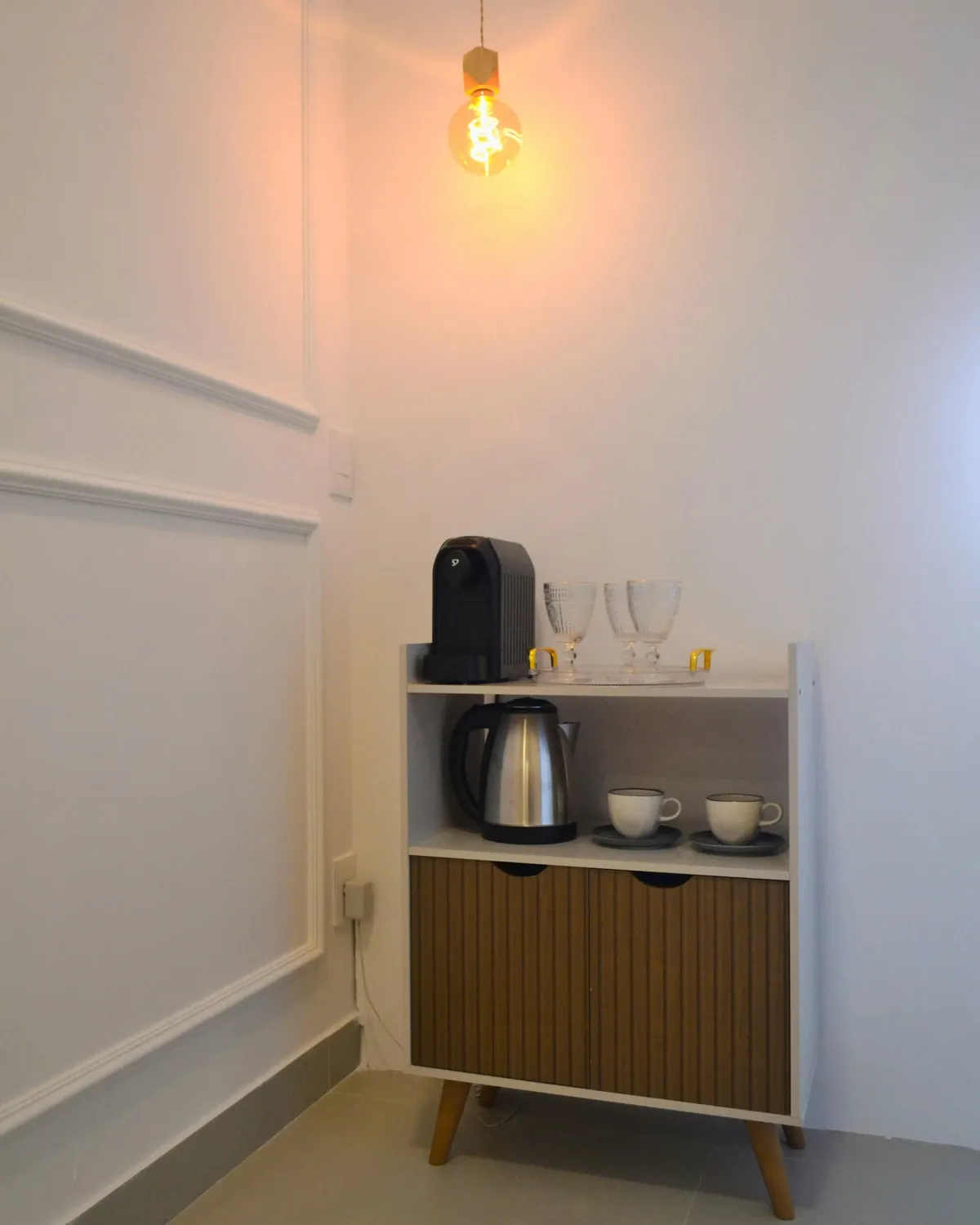
A single low cabinet is the simplest wooden coffee station. The machine and kettle go on top, mugs and pods inside. Pick one with a top at least 15 inches deep, because most pod brewers run 11 to 13 inches front to back and you want room for the cord.
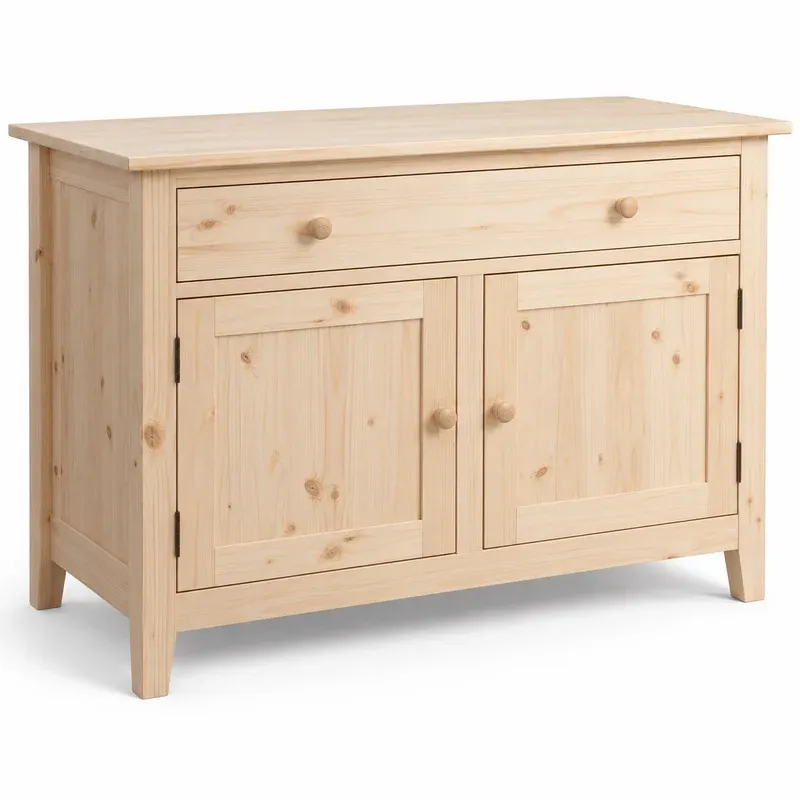
2. Finish a solid pine sideboard yourself
Unfinished solid pine is the budget route to a real wood coffee bar. You choose the stain, and dents sand out later. The From the Tree sideboard below is 44 inches wide and 18 inches deep, enough for an espresso machine and a grinder side by side. Pine is soft (380 lbf), so seal the top with polyurethane rather than oil.
Shop the solid pine look
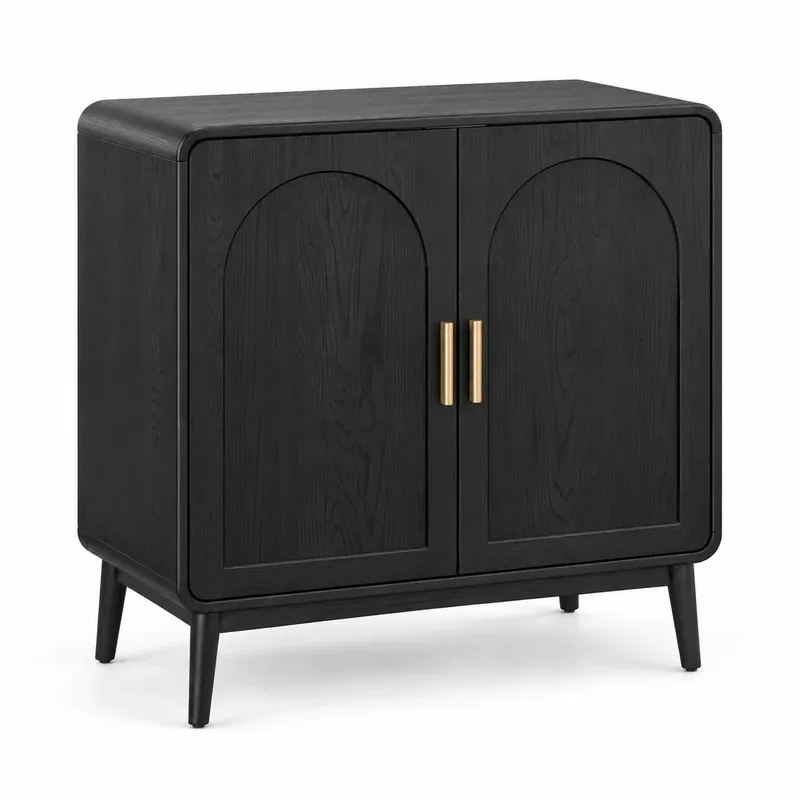
3. Style a mid-century wood credenza
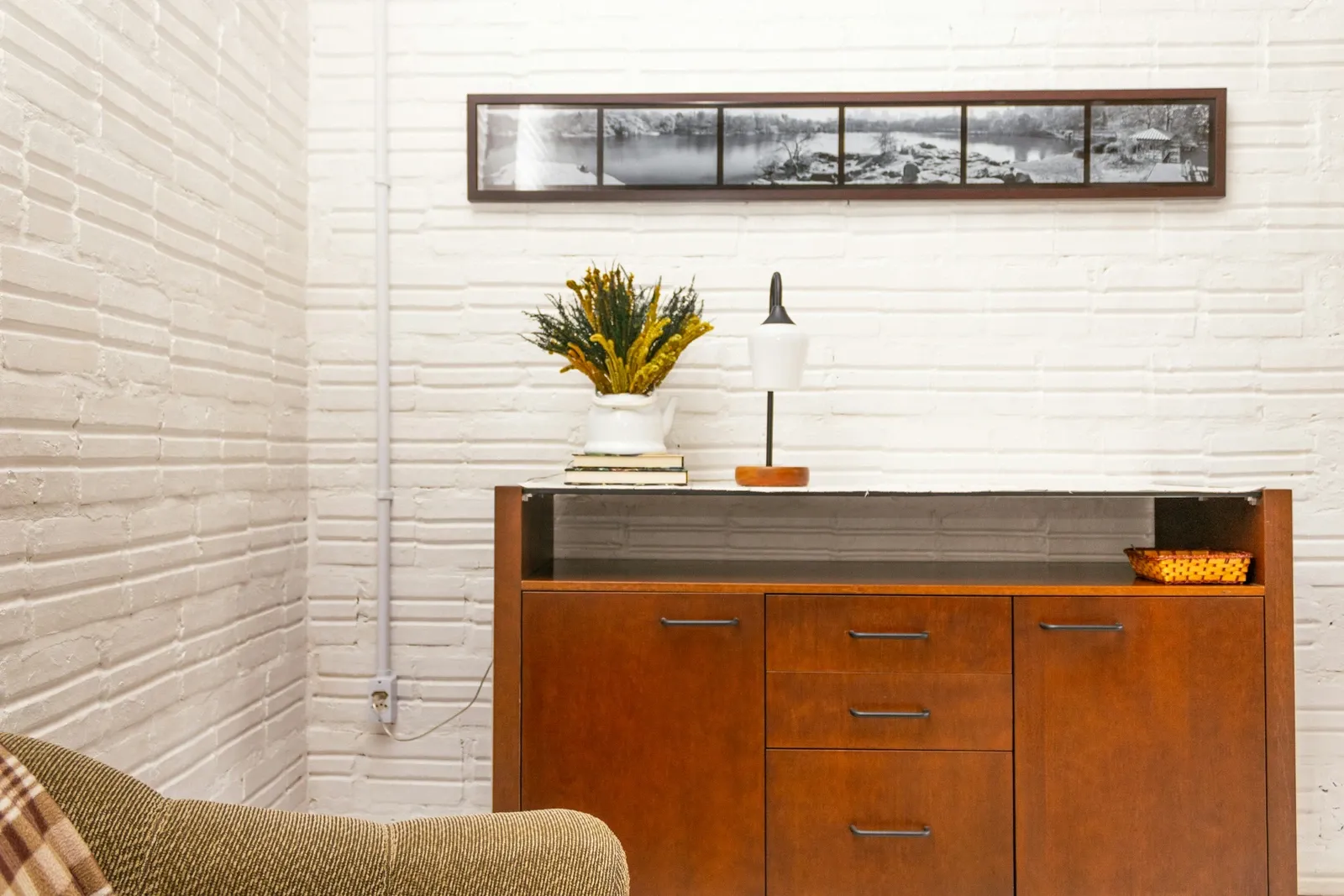
A low credenza with tapered legs works outside the kitchen because it reads as furniture, not an appliance stand. Keep the top sparse: machine at one end, a lamp or plant at the other. A smaller veneer credenza gets the same shape for less when no vintage piece turns up.
Shop the credenza look
4. Mount a wood cube shelf over an espresso nook
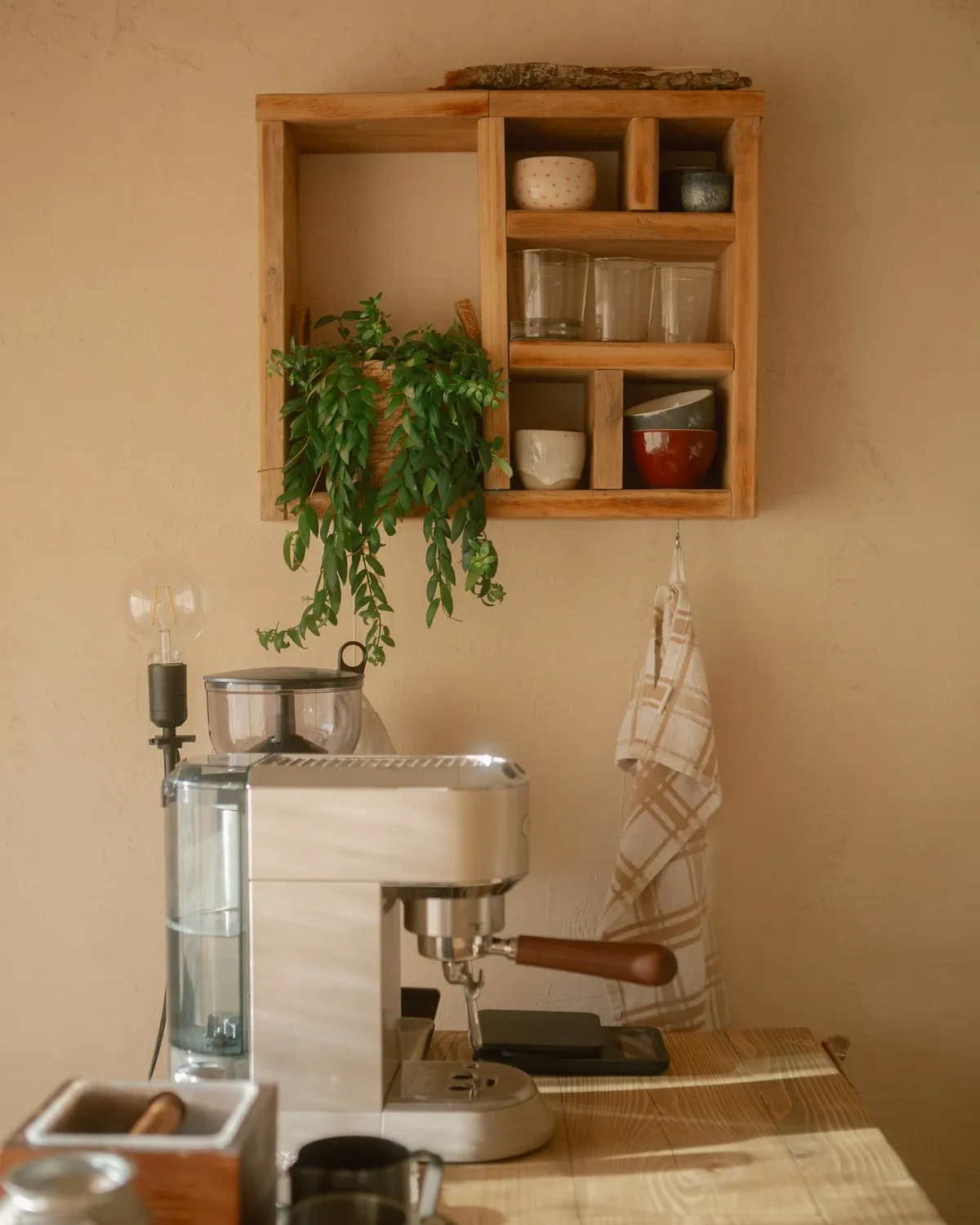
A small wood box shelf gives an espresso corner its own frame. Cups and glasses go in the cubbies, the plant softens it. Hang the bottom of the shelf at least 15 inches above the counter so you can lift the machine’s water tank out.
Butcher block coffee bar ideas (ideas 5 to 8)
Butcher block is the most common wood counter on a coffee bar, because it’s cheaper than stone and you can cut it with a circular saw.
5. Top base cabinets with a butcher block counter
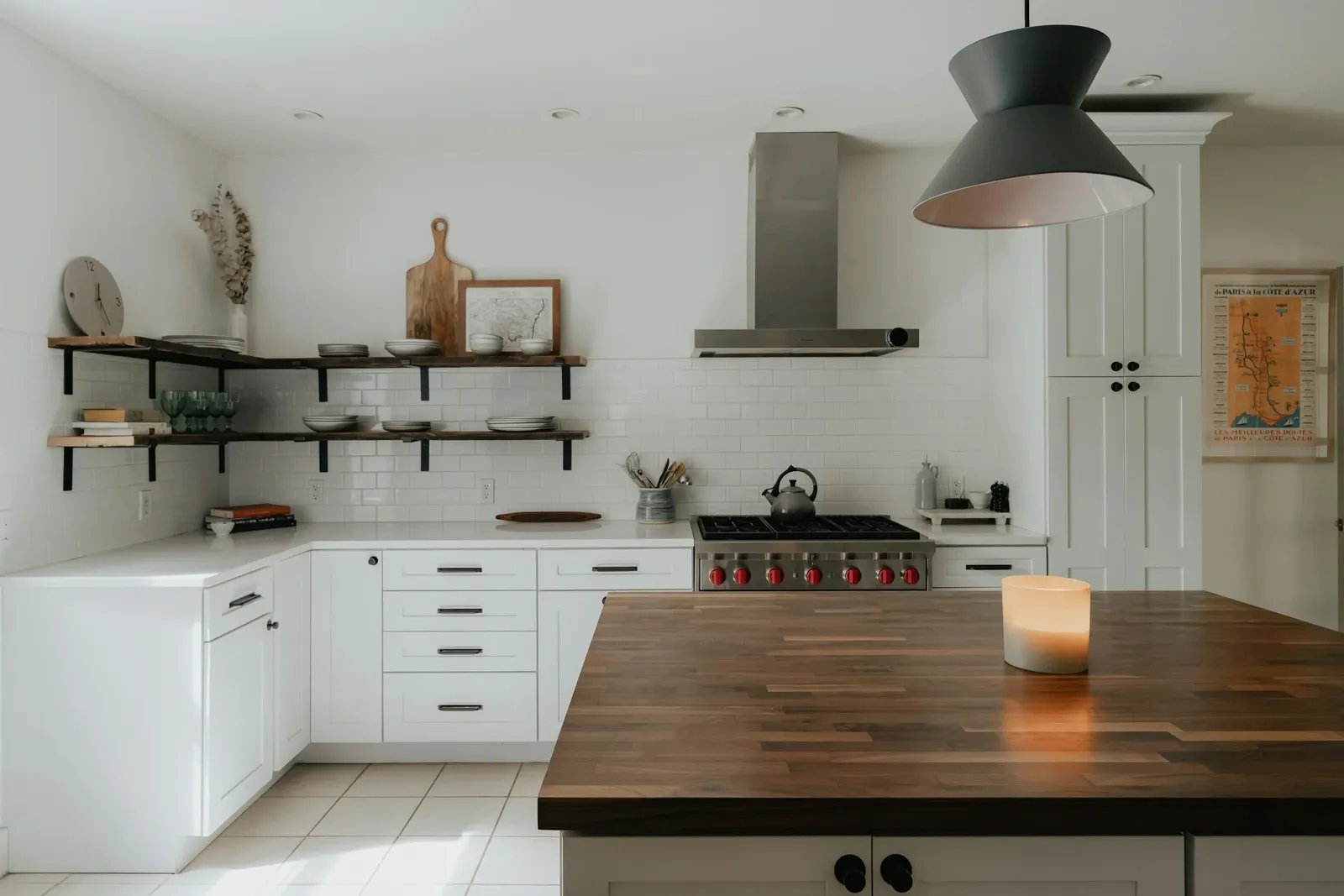
Standard kitchen base cabinets are 24 inches deep and about 34.5 inches tall, so a 25-inch-deep, 1.5-inch-thick block gives you a normal 36-inch counter with an inch of overhang. The walnut-stained acacia top below comes 60 inches long; other lengths are listed for a shorter bar.
Shop the butcher block look
6. Keep the end grain dry
Water gets into wood fastest through the cut ends. Before you install a butcher block, put two extra coats of finish on both ends and the underside. Unsealed undersides are why tops cup after a year next to a steamy machine.
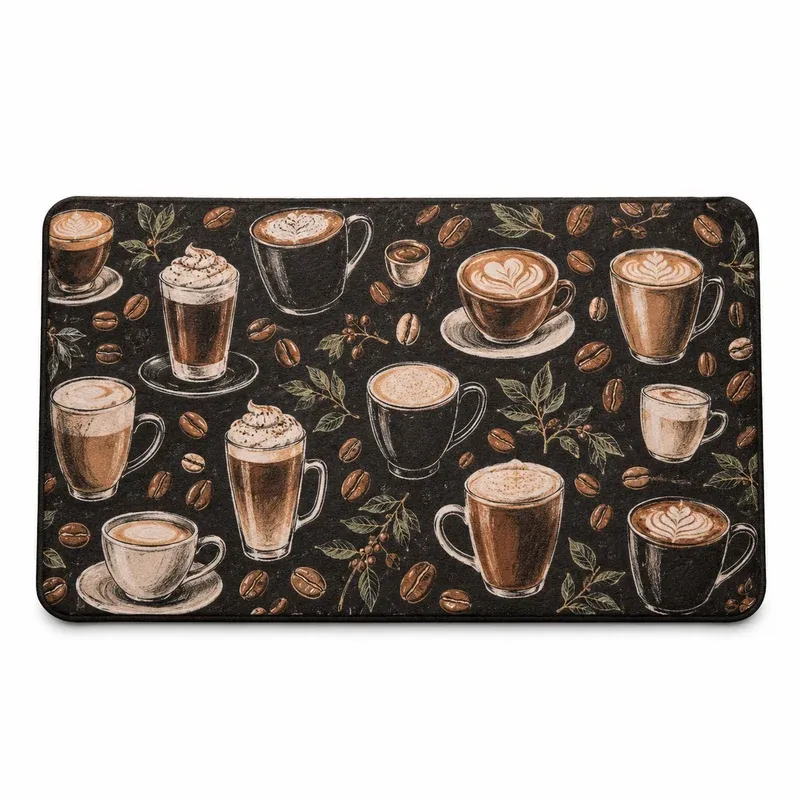
7. Put a mat under the machine
Drip trays overflow and portafilters drip. An absorbent mat with a waterproof back keeps that water off the wood, and you can wash it. A 12 by 20 inch mat fits under most pod brewers and compact espresso machines.
Shop the mat
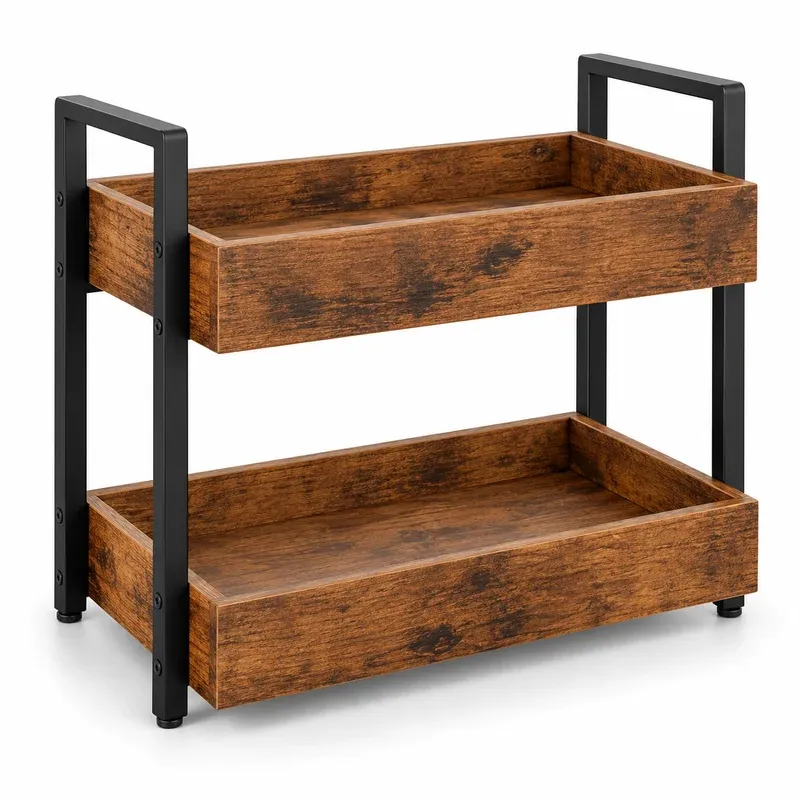
8. Add a wood riser for the small stuff
A two-tier wood riser next to the brewer lifts sugar, pods and syrups off the counter, so the butcher block stays clear and easy to wipe. Pick one with metal legs; it stays dry where it touches the counter.
Shop the riser
Light wood coffee bar ideas (ideas 9 to 11)
Light woods (maple, white oak, birch, ash) keep a small kitchen bright. They pair with white, cream and pale green, and they hide dust better than dark wood.
9. Go all light wood with a white backsplash
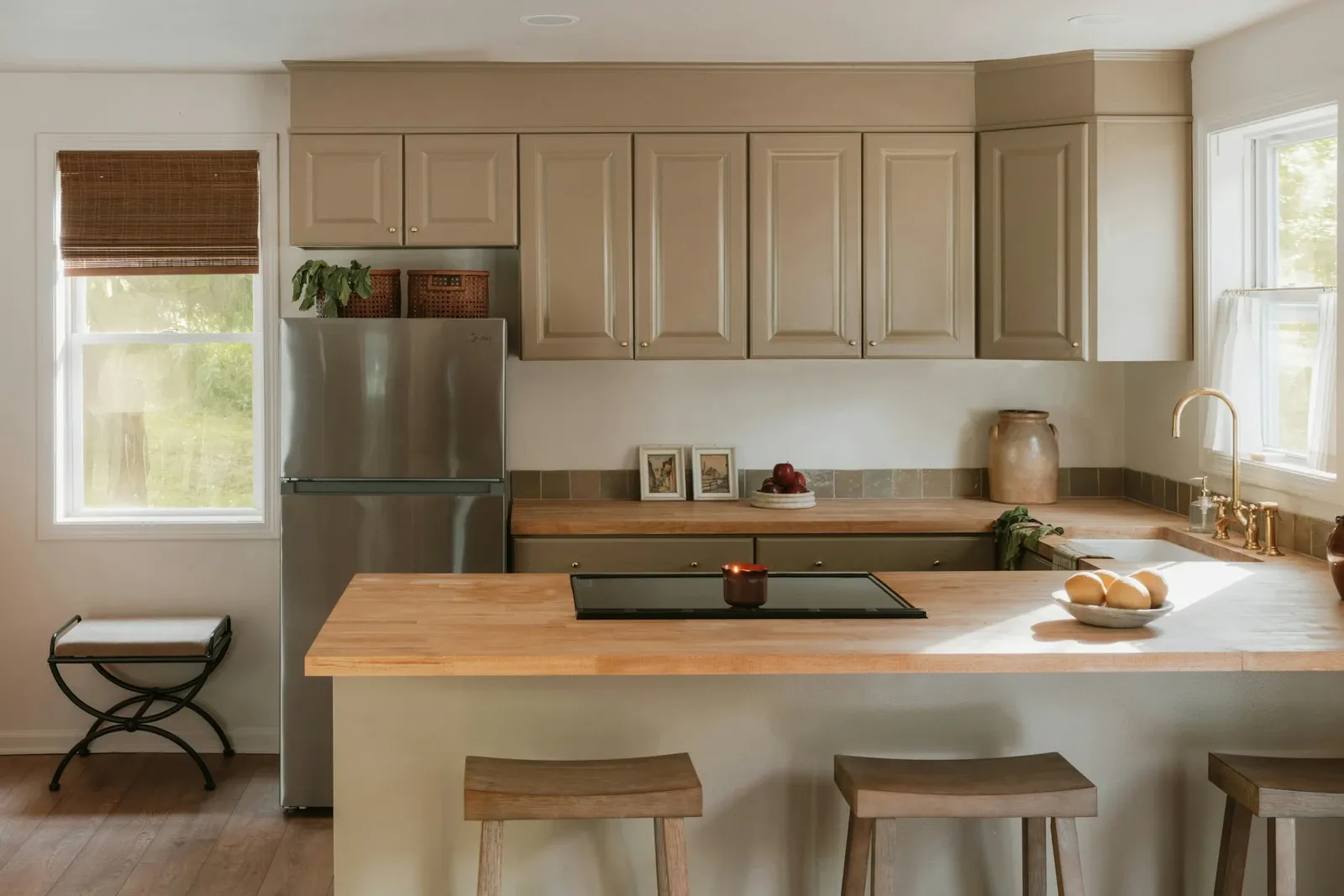
When the counters are already light wood, the coffee corner only needs one darker accent to stand out: a black brewer, a walnut tray or a dark canister. Keep the rest pale so the corner doesn’t fight the room.
10. Hang two light wood floating shelves over a pod brewer
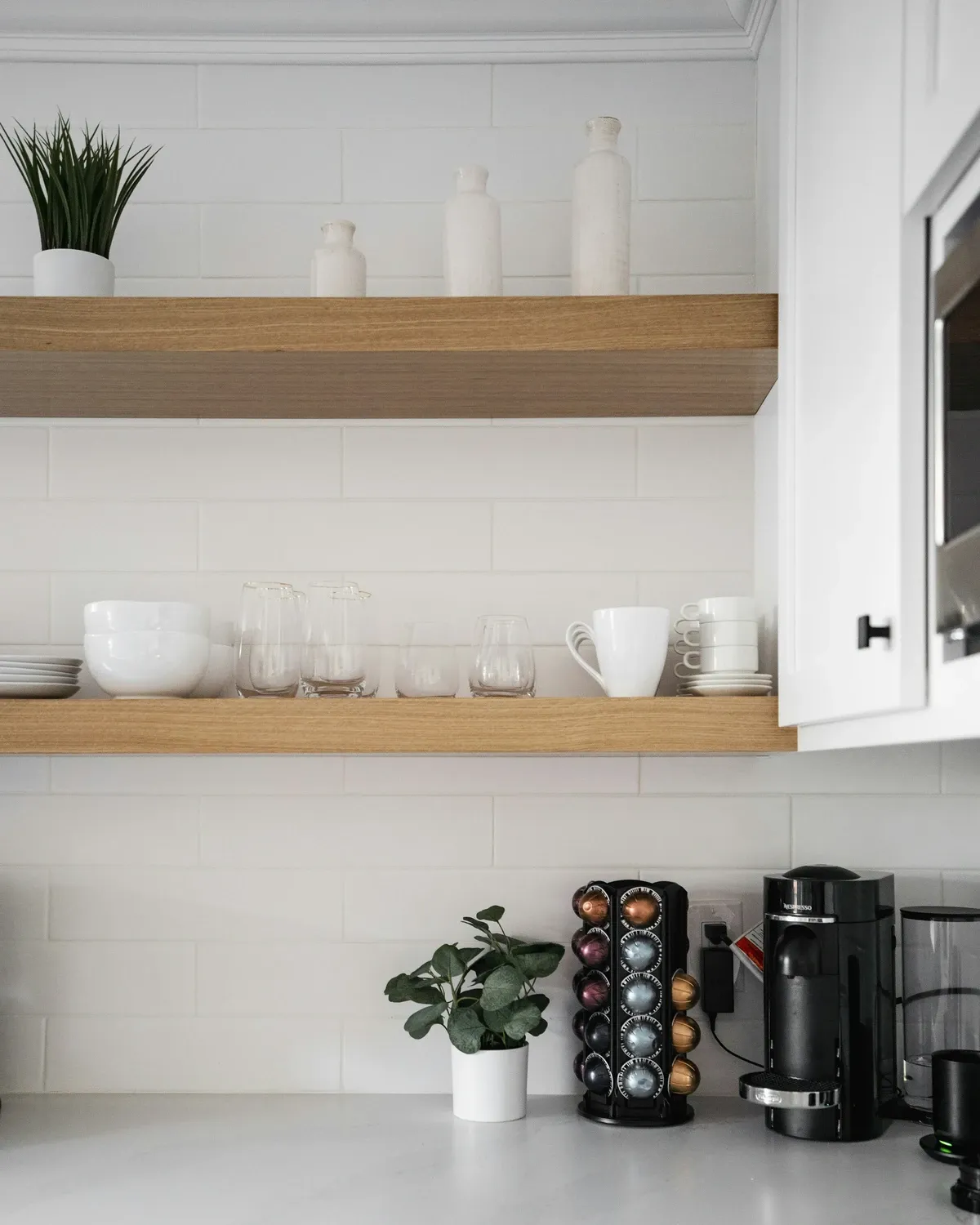
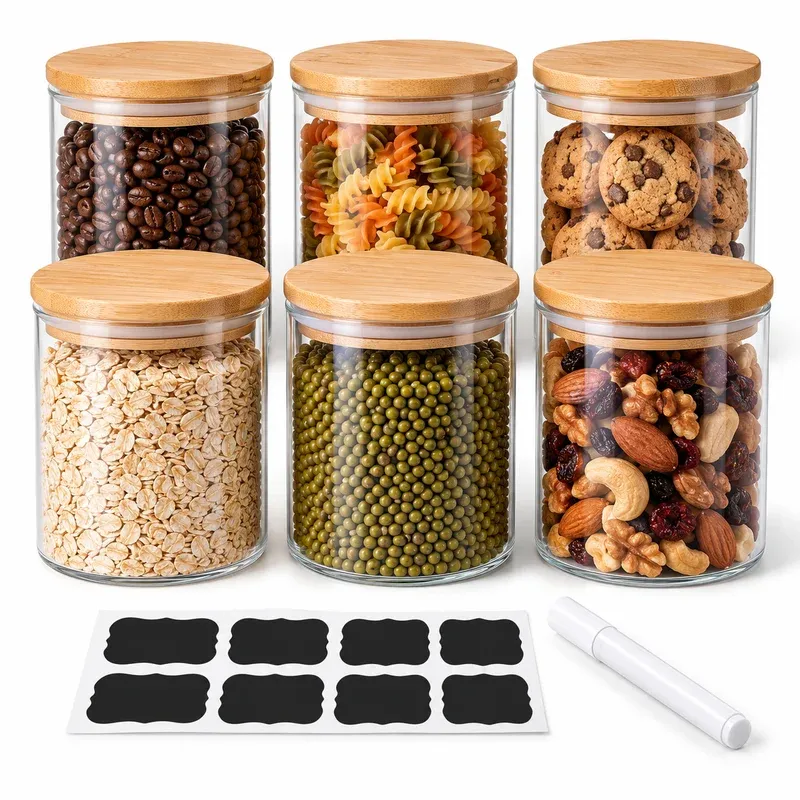
Two thick wood shelves on a white wall is a common Pinterest coffee bar look because it’s cheap and works in almost any kitchen. Mount the lower shelf 12 to 16 inches above the brewer so the lid opens. Glass jars with wood lids repeat the shelf color down on the counter. For more layouts, see the coffee bar shelves guide.
Shop the floating shelf look
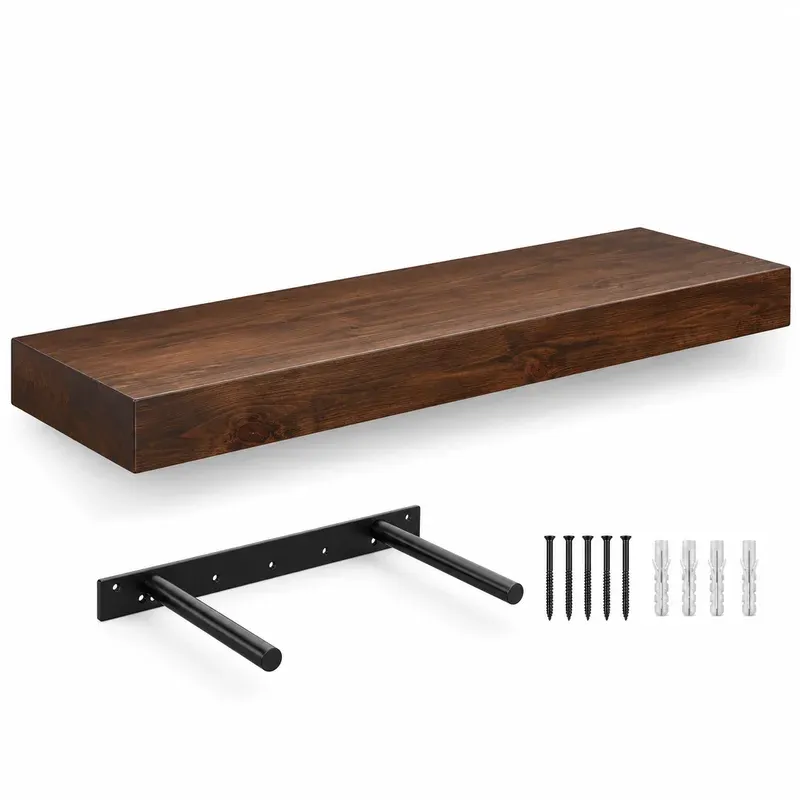
11. Turn a wood table by the window into a coffee station
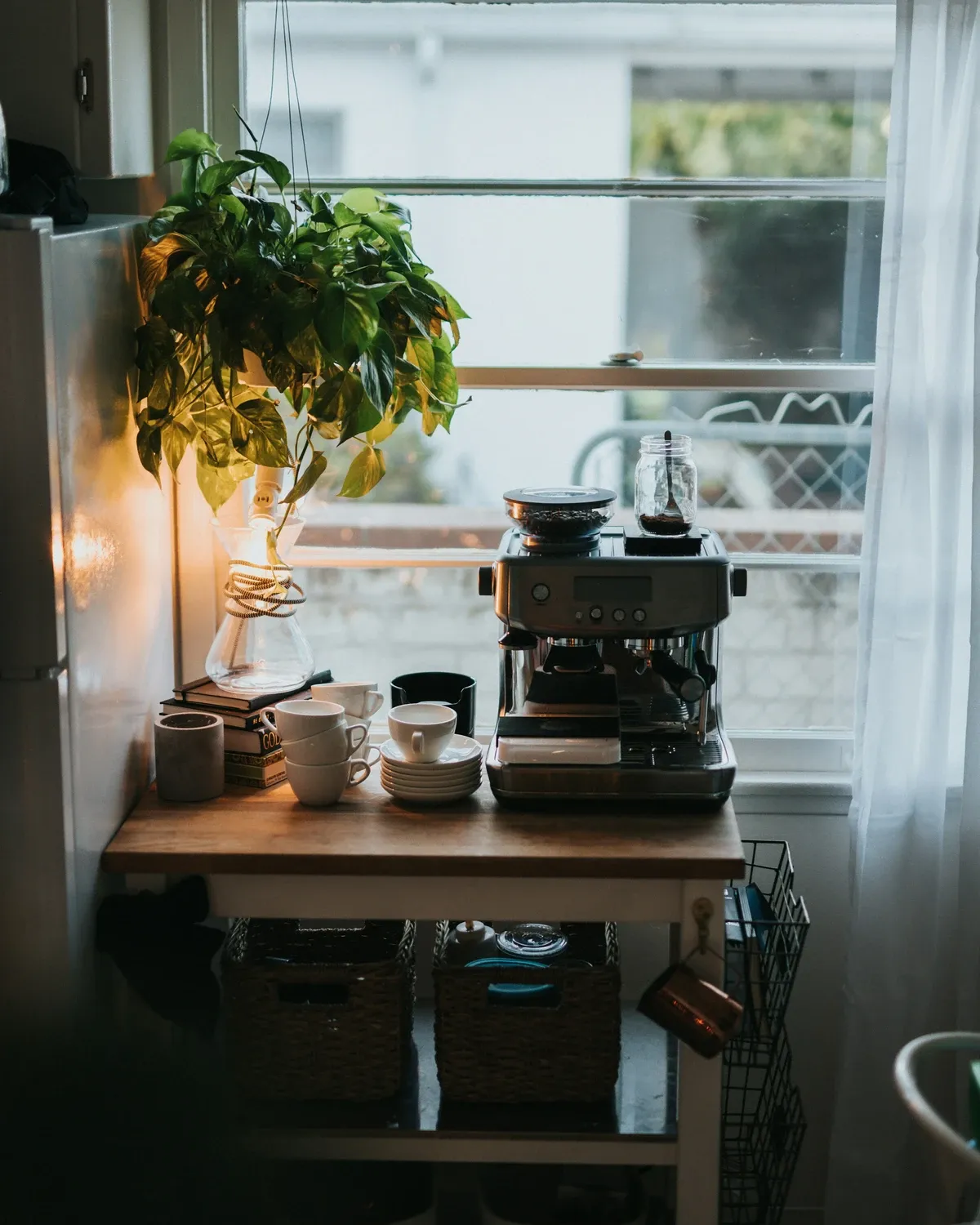
A plain wood table by a window works as a coffee bar when the kitchen is full. Daylight makes the grain glow in the morning. Put a tray under the machine to protect the tabletop, and run the cord along the wall, not across the walkway.
Dark wood and walnut coffee bar ideas (ideas 12 and 13)
Walnut and dark-stained wood look rich and hide coffee stains. They need more light, though: add under-shelf lighting or a lamp.
12. Build the bar into walnut cabinetry
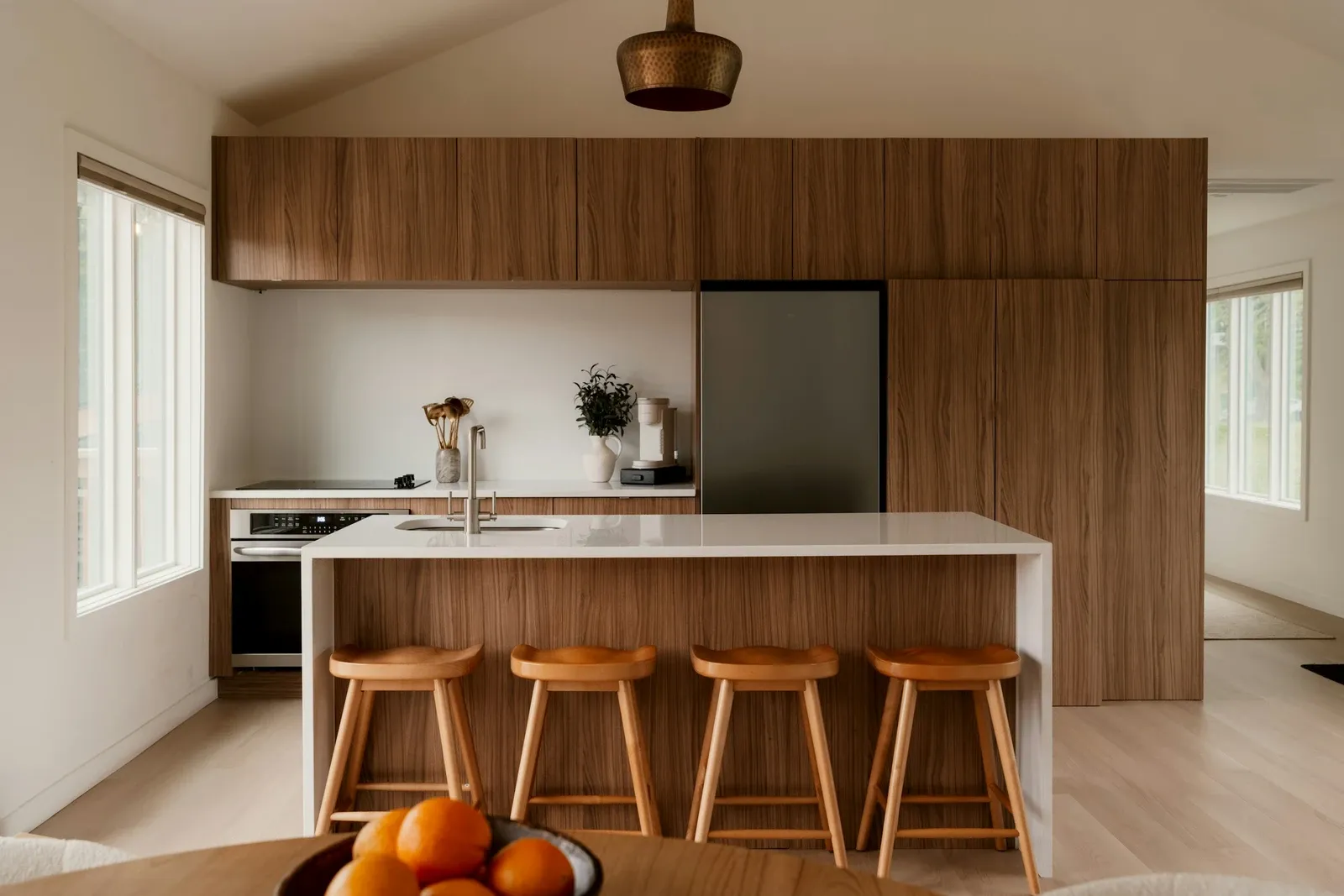
In a walnut kitchen, a coffee bar can live behind one tall door or at one end of the run. The trick is contrast: a white or light stone counter under the machine so the walnut frames it instead of swallowing it. For the high-end version, see the luxury coffee bar ideas.
13. Add walnut with small tools, not big furniture
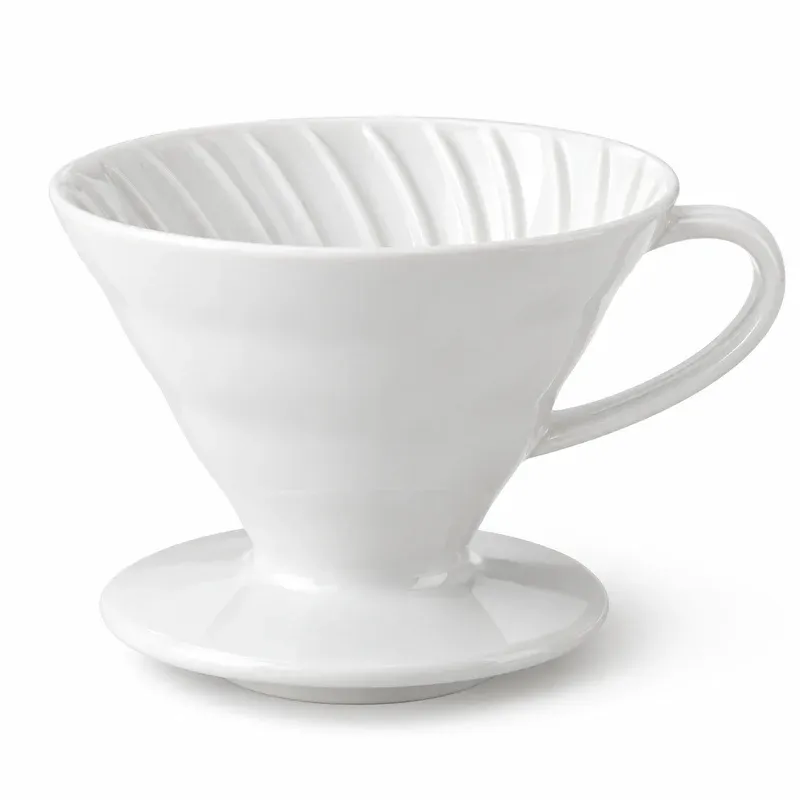
You don’t need walnut cabinets to get the look. A walnut pour-over stand, a dark wood scoop or a walnut tray on a white counter gives the same warmth for a fraction of the cost. A 5.8-inch stand holding a ceramic cone takes less counter than a pod brewer.
Shop the walnut pour-over look
Wooden shelves, racks and coffee wall decor (ideas 14 to 17)
Wall space is free storage. Wood on the wall pulls the eye up, which makes a small coffee corner look bigger.
14. Pair pipe brackets with thick wood shelves
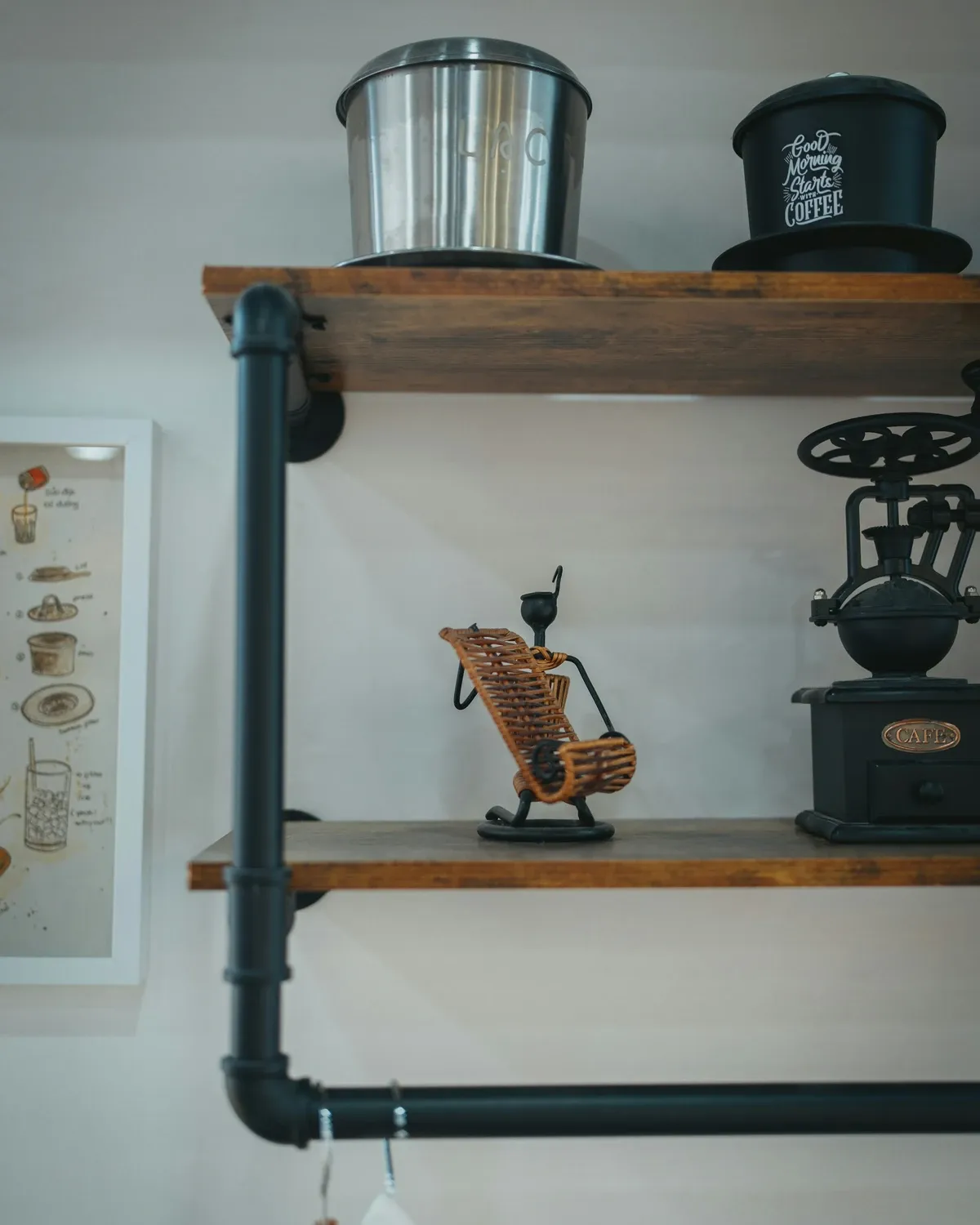
Black iron pipe and rough wood is the industrial version of a wood coffee bar. The pipe brackets hold heavy canisters and a hand grinder without sagging. Screw the flanges into studs; a loaded 36-inch shelf of mugs and jars gets heavy.
15. Hang mugs on a wooden wall rack
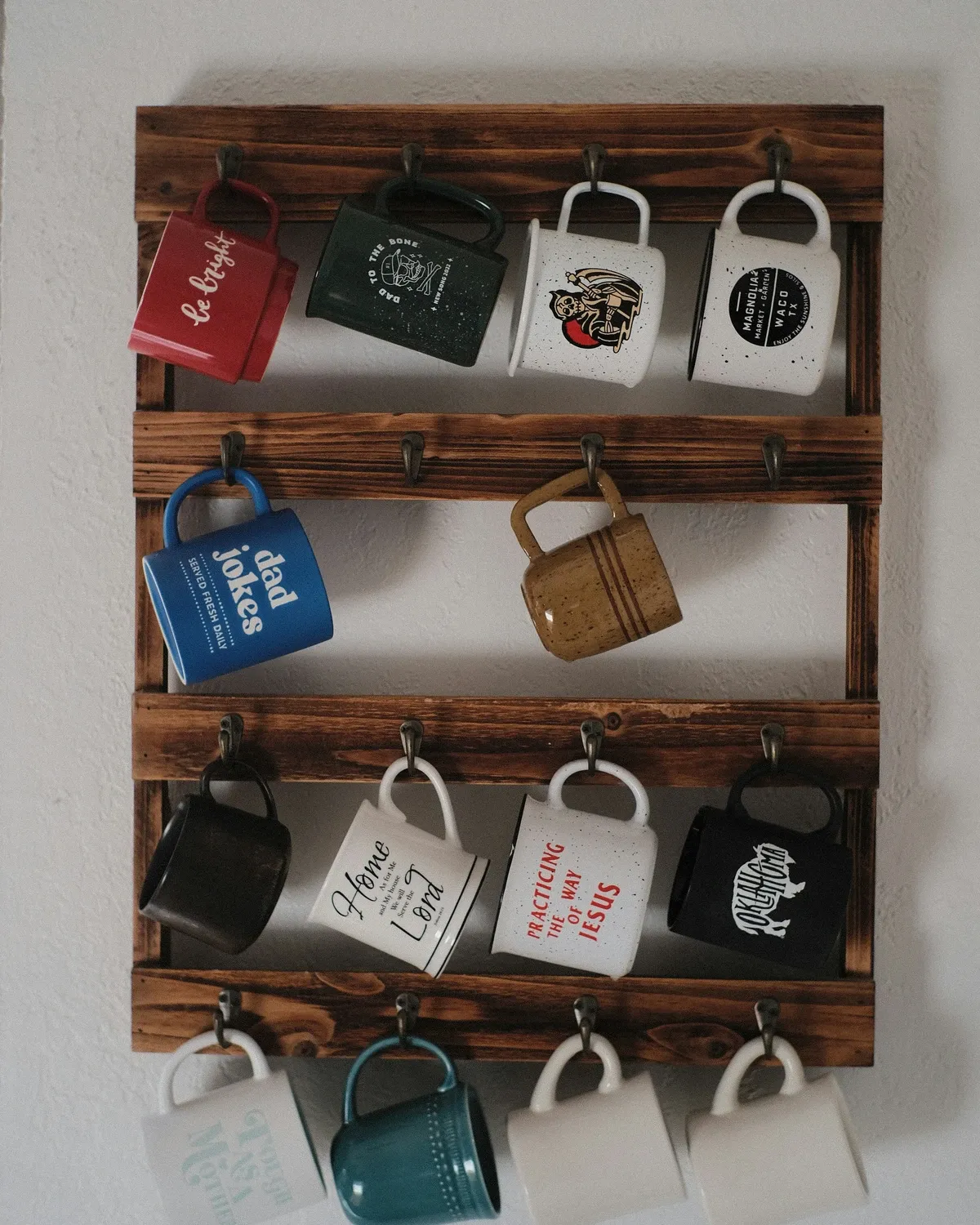
A wooden mug rack turns your mug collection into wall decor and frees a cabinet shelf. A rack with a shelf on top doubles as a spot for a canister or a small plant. Keep it out of the steam path so the wood stays dry. There are more ways to show off mugs in the mug display ideas guide.
Shop the mug rack
16. Line open wood shelves with handmade mugs
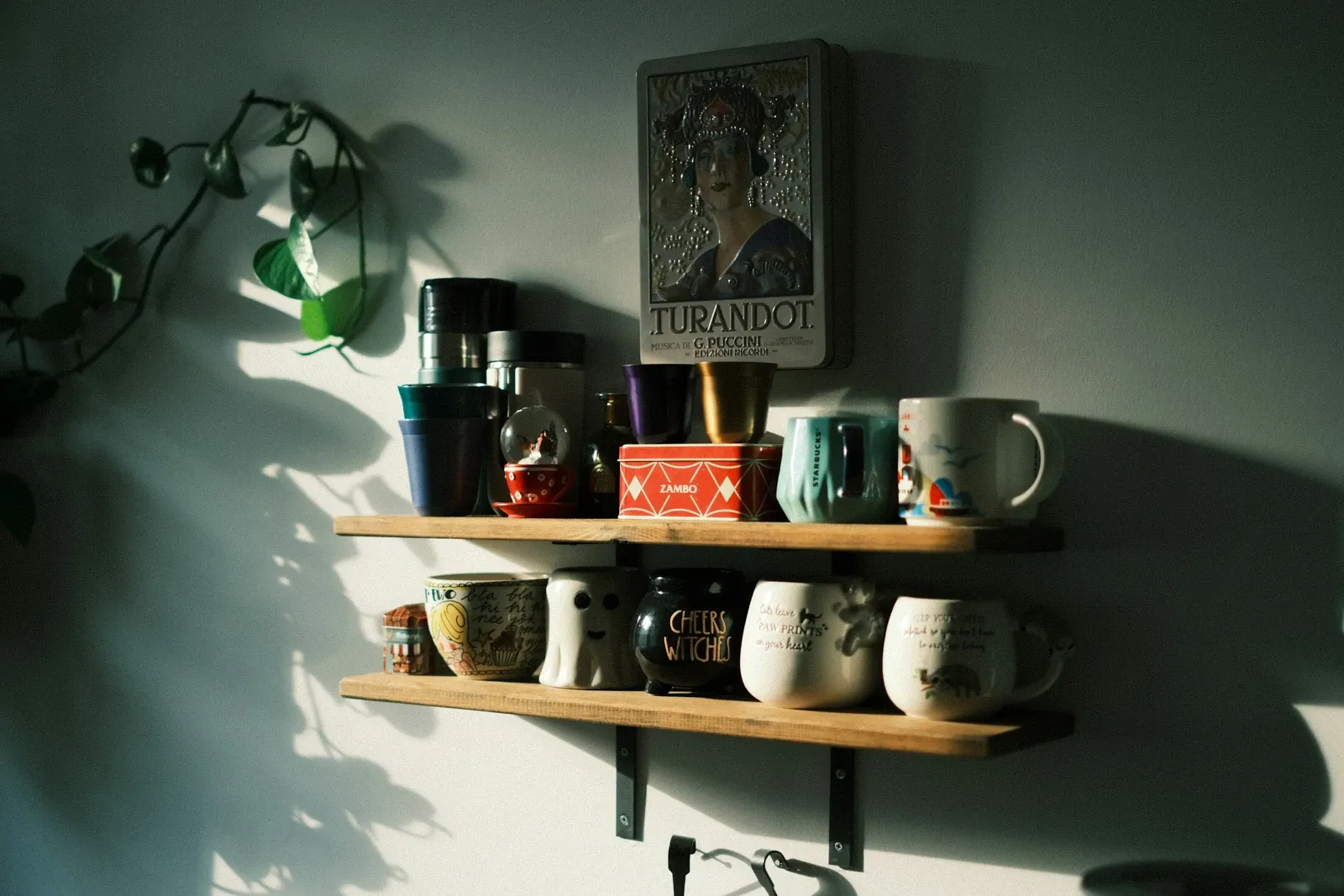
Earthy glazes (green, rust, speckled cream) look best against raw or oiled wood. Group mugs by color, leave gaps, and add one trailing plant per shelf. The wood stays the background and the mugs do the decorating.
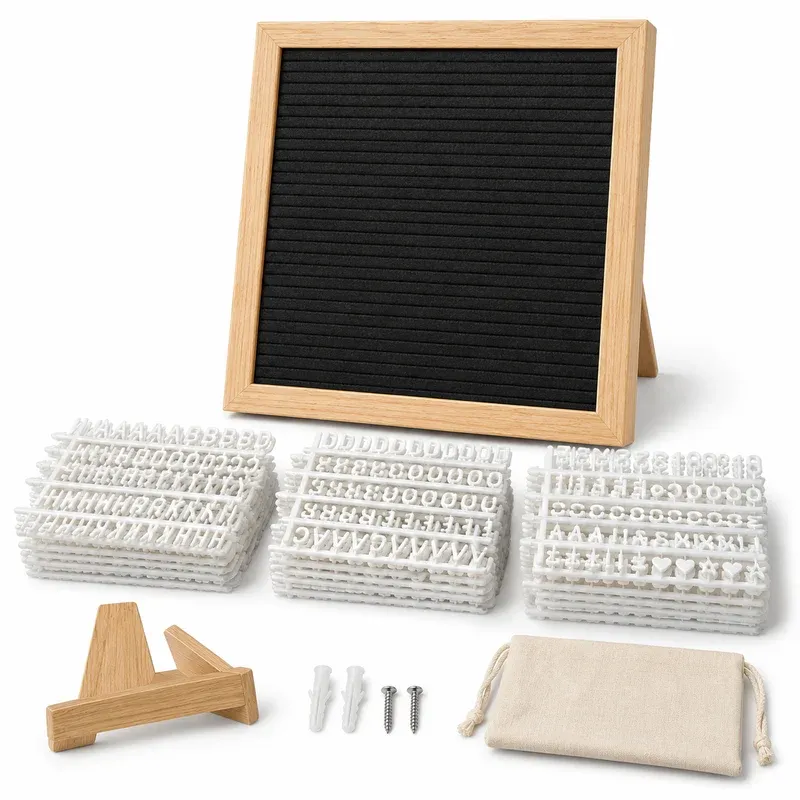
17. Hang a wood coffee sign or letter board
Coffee wood wall decor can be one wooden word sign or a framed letter board above the machine. Pick one; three signs on one wall is clutter. A cut-out sign that mounts with tape suits renters. Prefer to print your own? Our free coffee bar printables and coffee bar sign ideas fit standard frames.
Shop the wall decor
Wooden coffee bar accessories (ideas 18 to 20)
No wood furniture at all? Wooden accessories on a plain counter still give you a wood coffee station.
18. Group everything on a wood tray
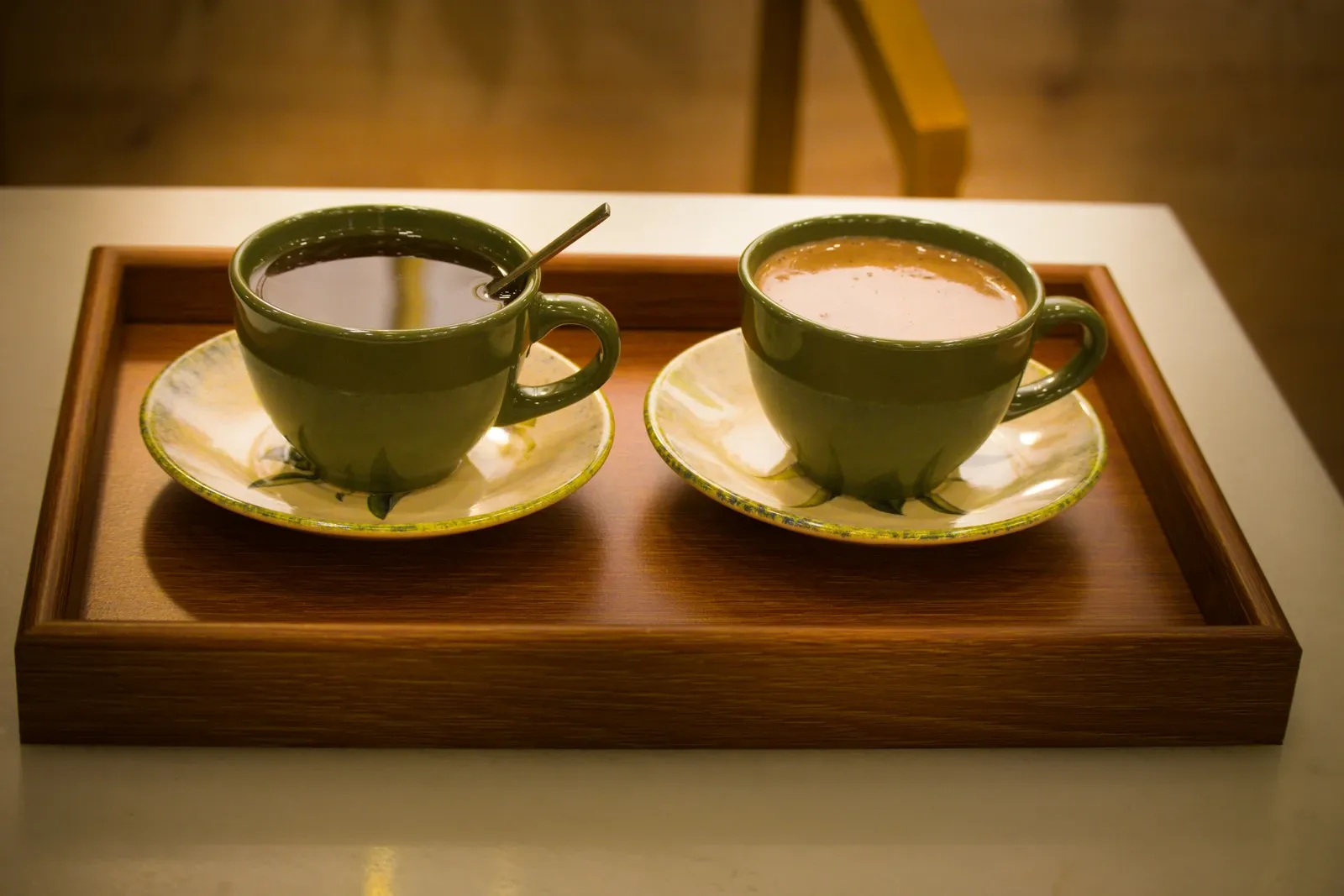
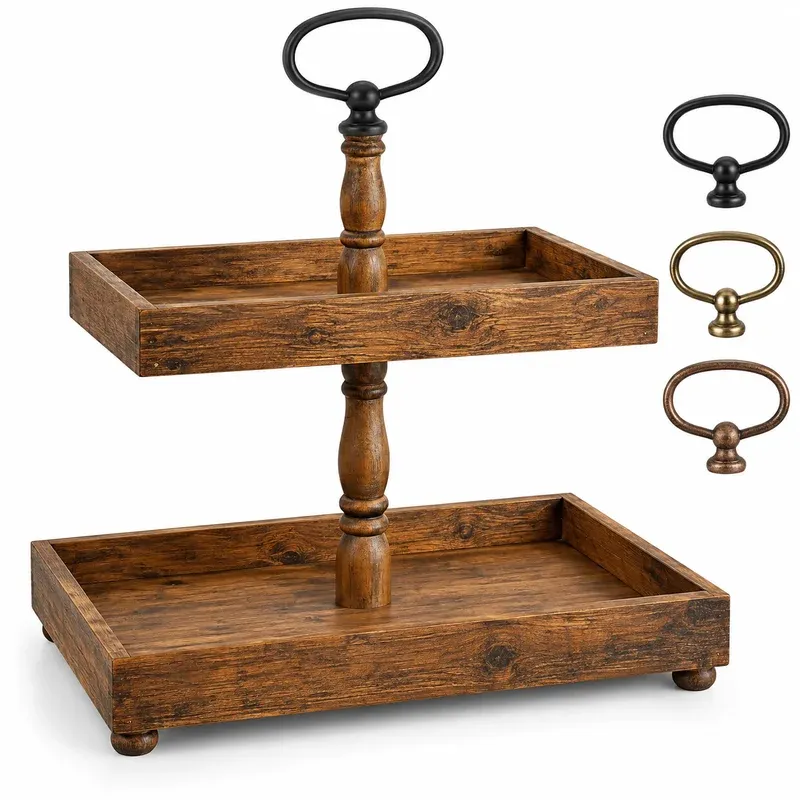
A tray gives a counter coffee station edges and lifts off in one go when you wipe. Acacia and teak trays shrug off a little water better than pale maple. A two-tier wood tray does the same job in half the width.
Shop the tray look
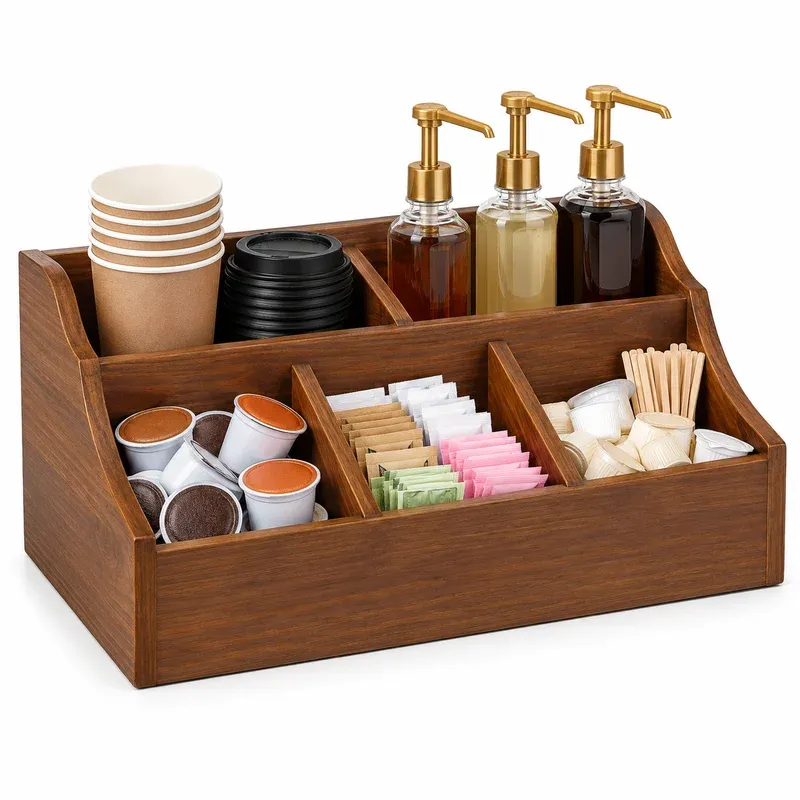
19. Sort pods and packets in a wood organizer
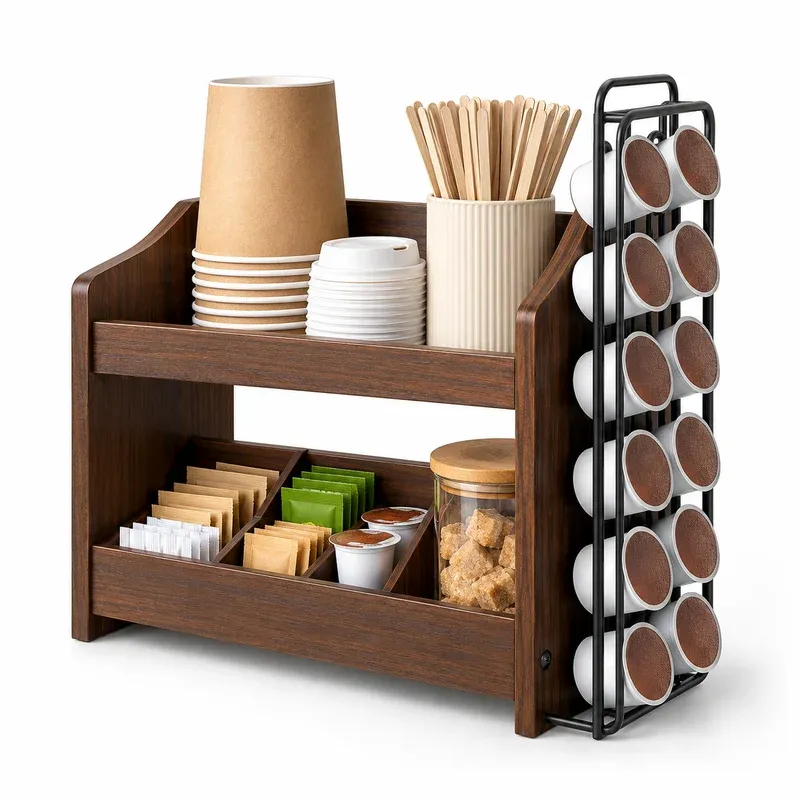
Wooden organizers hide the plastic: pods, sugar packets, tea bags and stirrers each get a slot. A low caddy with dividers sits beside the brewer; a two-tier caddy with a pod rack goes up instead of out.
Shop the organizers
20. Repeat wood with a mug tree, canisters and a turntable
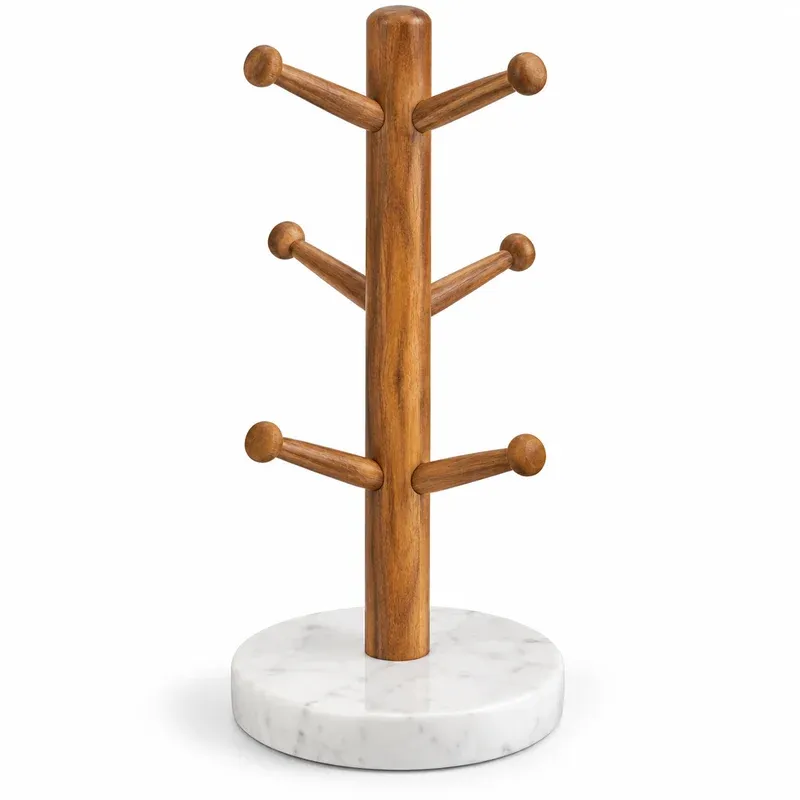
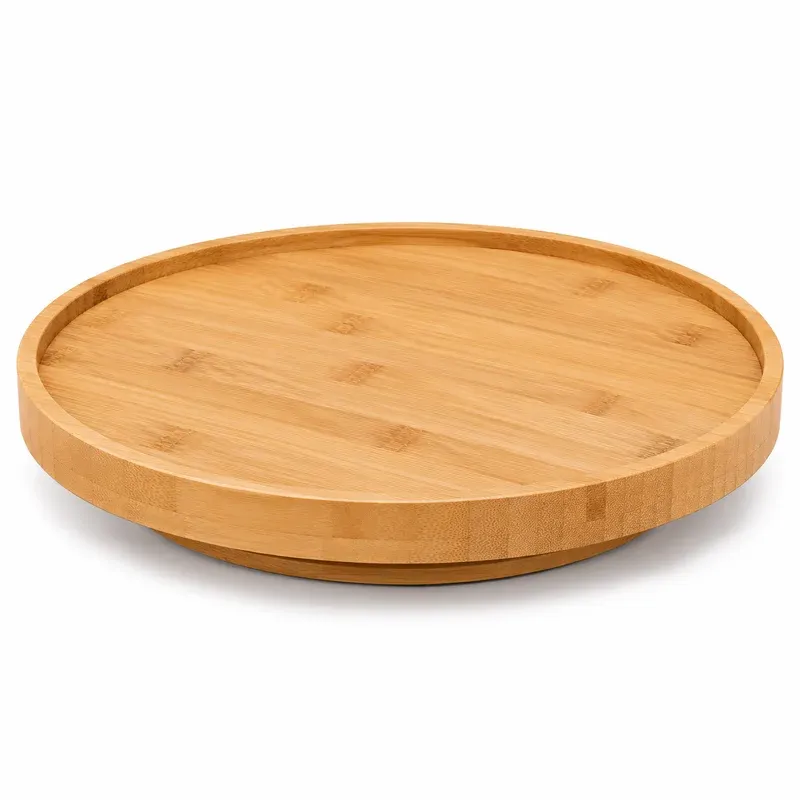
This is how you hit “wood three times” on a budget: an acacia mug tree, a canister with a wood lid and a bamboo turntable for syrups. Three small pieces, one tone, and a white counter suddenly looks like a planned wood coffee bar.
Shop the accessories
How to mix wood tones on a coffee bar
Most homes already have two or three woods: floors, a table, a cabinet. Mixing is fine. Clashing happens when two woods are almost the same color but not quite. Four rules fix it:
- Pick the boss. The biggest wood surface leads. Usually that’s the floor or the coffee bar cabinet.
- Go clearly lighter or darker. A walnut tray on a maple counter works. A honey oak tray on a slightly different honey oak counter looks like a mistake.
- Match the undertone. Warm woods (cherry, red oak, honey pine) lean orange; cool woods (white oak, ash, gray-washed finishes) lean beige-gray. Stay on one side.
- Break it up with a non-wood. A white wall, a black metal shelf bracket or a ceramic canister between two woods gives the eye a rest.
Protecting a wood coffee bar from water, heat and stains
The finish decides how much care a wood coffee bar needs. The comparison below uses the finishing guide from Slabwise and John Boos’s care instructions for oiled blocks.
| Finish | How often to redo it | Water resistance | Good for |
|---|---|---|---|
| Food-grade mineral oil | About monthly on a working surface (every 1 to 3 months per Slabwise) | Low; water beads briefly, then soaks in | Trays, boards, tops you oil often |
| Mineral oil with beeswax (board cream) | Monthly | Low to medium | Butcher block that sees light use |
| Hardwax oil | Spot-refresh as it wears | Medium | Tops where you want an oiled look with less upkeep |
| Polyurethane or varnish | Every 3 to 5 years | High | The top under a machine, kettle or sink |
My rule of thumb from those sources: oil the wood you touch and cut on, and put polyurethane under the coffee machine. Then add three habits. Wipe spills the same day, keep a mat under the brewer, and point kettle steam away from shelves and the wall. Steam is what lifts veneer and swells MDF, so keep it off wood-look decor too.
More coffee bar ideas by style
Wood shows up in almost every style. If you like the warmth but want a stronger look, these guides go further:
- Farmhouse: shiplap, barn doors and distressed wood in the farmhouse coffee bar ideas.
- Green: dark green cabinets look best next to oak and walnut; see the green coffee bar ideas.
- Every style and space: the full list of 50 coffee bar ideas for home, sorted by place, style and budget.
- Supplies: what to put on the bar once it’s built, in the coffee bar essentials list.
- On wheels: a wood-shelf cart works too; see the coffee bar cart guide.
Frequently asked questions
What wood is best for a coffee bar counter?
Hard maple and white oak are the safest picks. Maple is the hardest common counter wood at 1,450 lbf on the Janka scale, and white oak (1,350 lbf) has closed pores, so water doesn't soak in as fast. Walnut is softer but rated very durable and gives the dark look. Avoid red oak right next to the machine; its open pores stain when water sits on them.
How do you protect a wood coffee bar from water?
Seal the top, then keep standing water off it. An oil finish needs a fresh coat about once a month on a working surface; polyurethane lasts years but can't be spot-repaired as easily. Put an absorbent mat under the brewer, wipe drips the same day and keep the kettle spout pointed away from the wall.
Is butcher block good for a coffee bar?
Yes, if you seal it. Butcher block is warm, easy to cut to size and costs less than stone. The weak spot is water: drip trays, kettle steam and wet mugs. A sealed top plus a mat under the machine solves most of it, and small scratches sand out.
Can you mix wood tones on a coffee bar?
Yes. Pick one main wood for the biggest piece, keep the other woods clearly lighter or darker, and match the undertone (warm red-orange or cool gray-beige). Repeat the main wood at least three times, for example the counter, a shelf and a tray, so it looks planned.
What colors go with a wood coffee bar?
White, cream and black are the easy ones, because they let the grain show. Sage green, terracotta and warm gray sit well next to oak and walnut too. Brass and matte black hardware both work; chrome tends to look cold next to warm wood.
Free coffee bar essentials checklist
Every tool and supply on one printable page, tagged essential, upgrade or splurge, so you buy the right things first.